All we had was a slip of paper from the hotel notepad. Written in pencil: a name, Teresa, and a date of birth, 1850.
The cemetery of Craco, in Basilicata, is small and walled. Some graves are set in the ground, and you can easily spot the very old ones, worn by sun and time, without flowers. The two guests and I split up and went in opposite directions.
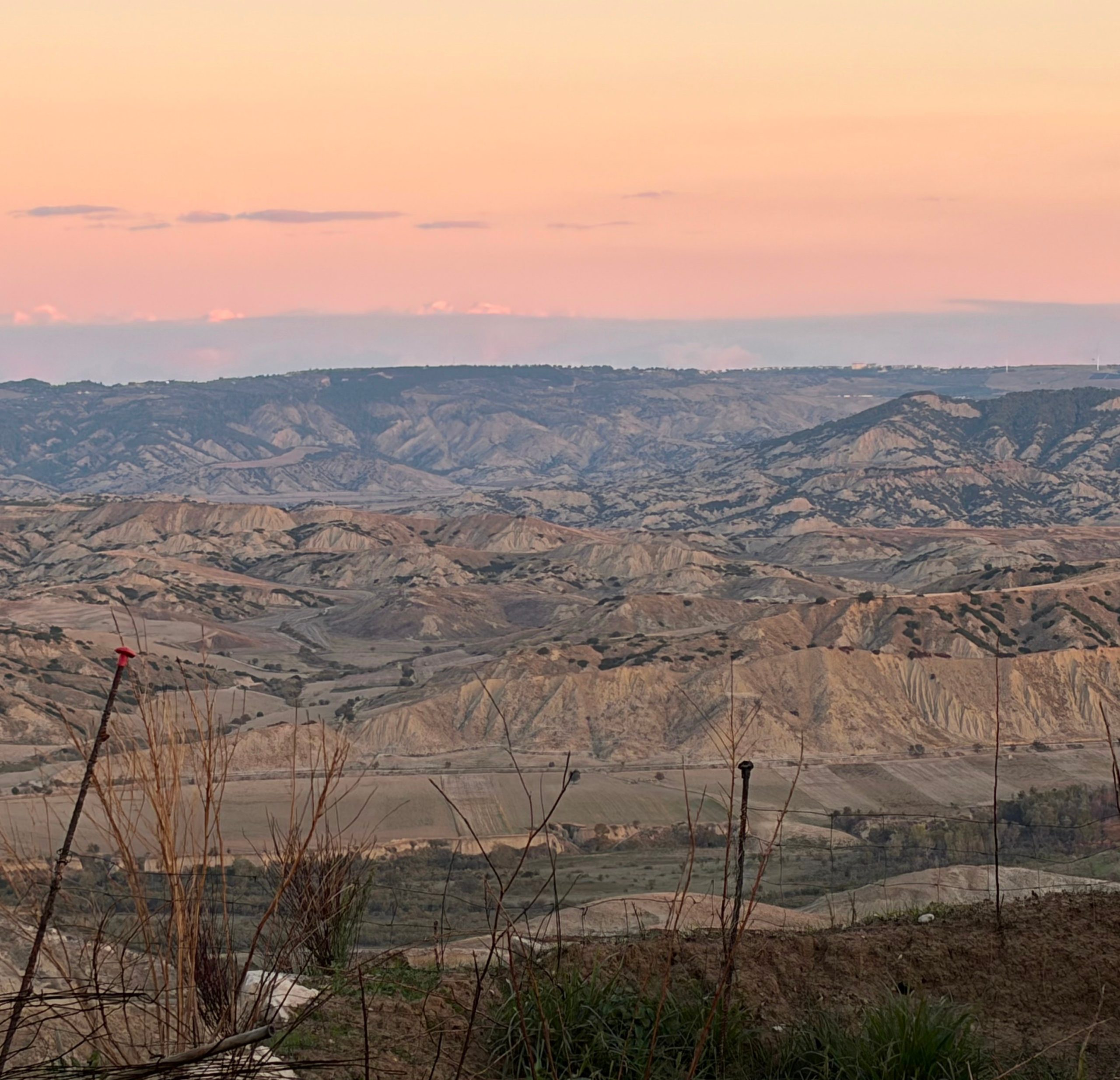
We walked the rows at sunset, the sky all pink and red against the golden bare fields. I kept seeing names that matched, but the dates didn’t. I got a little discouraged. What if we didn’t find her? How disappointing it would be to go back to the US without finding her.
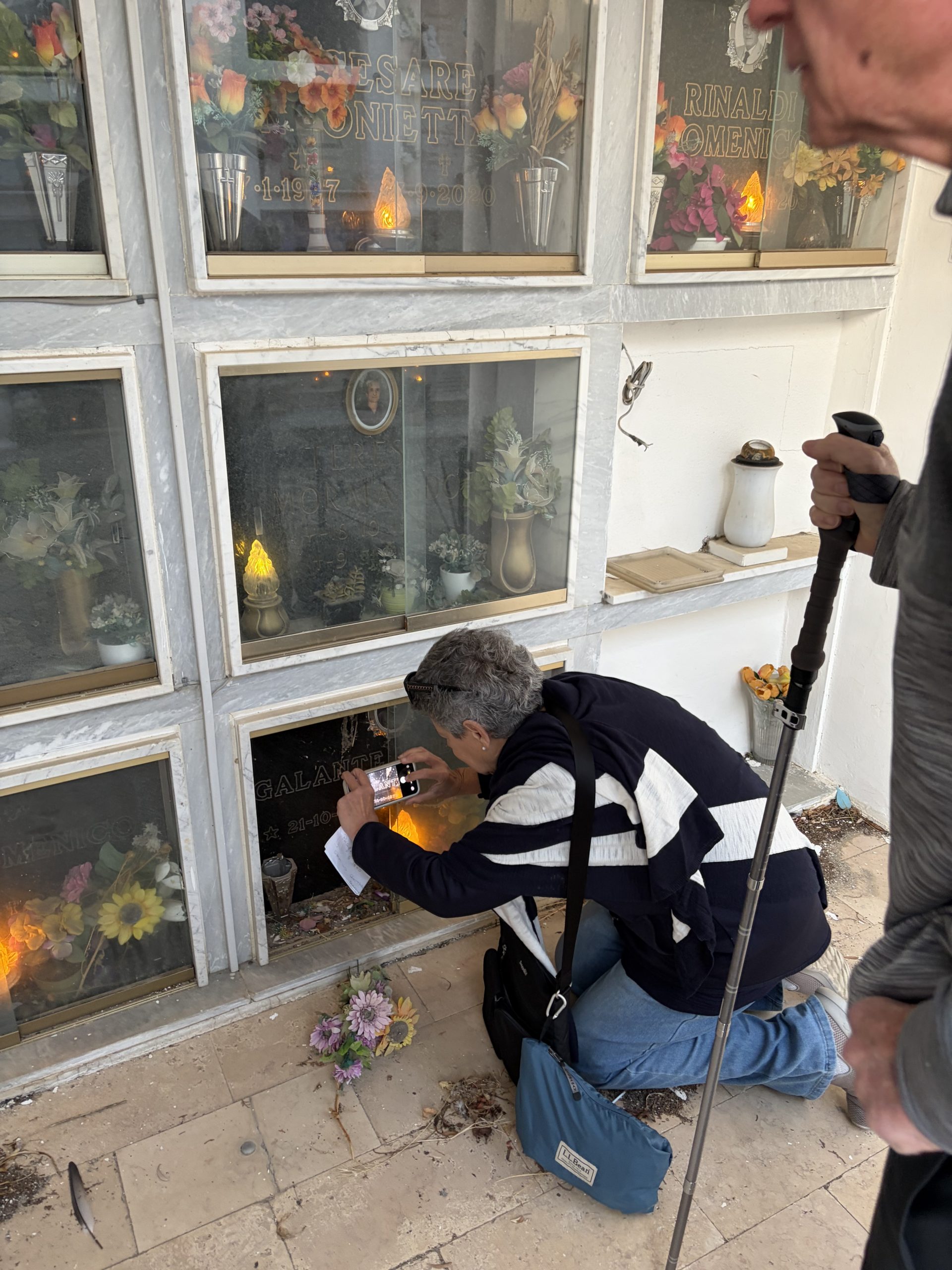
I walked the rows again, and this time I looked below eye level. At the bottom row, there she was, behind a clouded glass. I shouted, “I found her!” We were the only ones in the cemetery anyway. The guests bent down to see her. “This is your great-grandmother”, I said.
How do you introduce yourself to a picture on a grave?
I was so happy. I knew that finding her meant going backwards to places and times and somehow closing a loop. We took pictures and left.
This fall I did something I had never done on a tour before. Some of my guests have Basilicata heritage. Their ancestors came from Craco, a village emptied by a landslide that began in 1963, now “rebranded” as a ghost town, a perfect movie set. But for them, this was the first time they set foot in the land of their ancestors. For me, it was the first time I had the privilege of witnessing that moment.
I offered to be the interpreter when they met their local relatives, on a sunny Sunday afternoon. The family had laid out a buffet of treats and drinks. They were family, but they couldn’t understand each other without me.
One woman saw a guest for the first time and was overcome. The guest reminded her of her grandmother. “As soon as I saw her,” she told me, “I knew who she was.” I watched strangers with very different lives discover that their lives were interwoven.
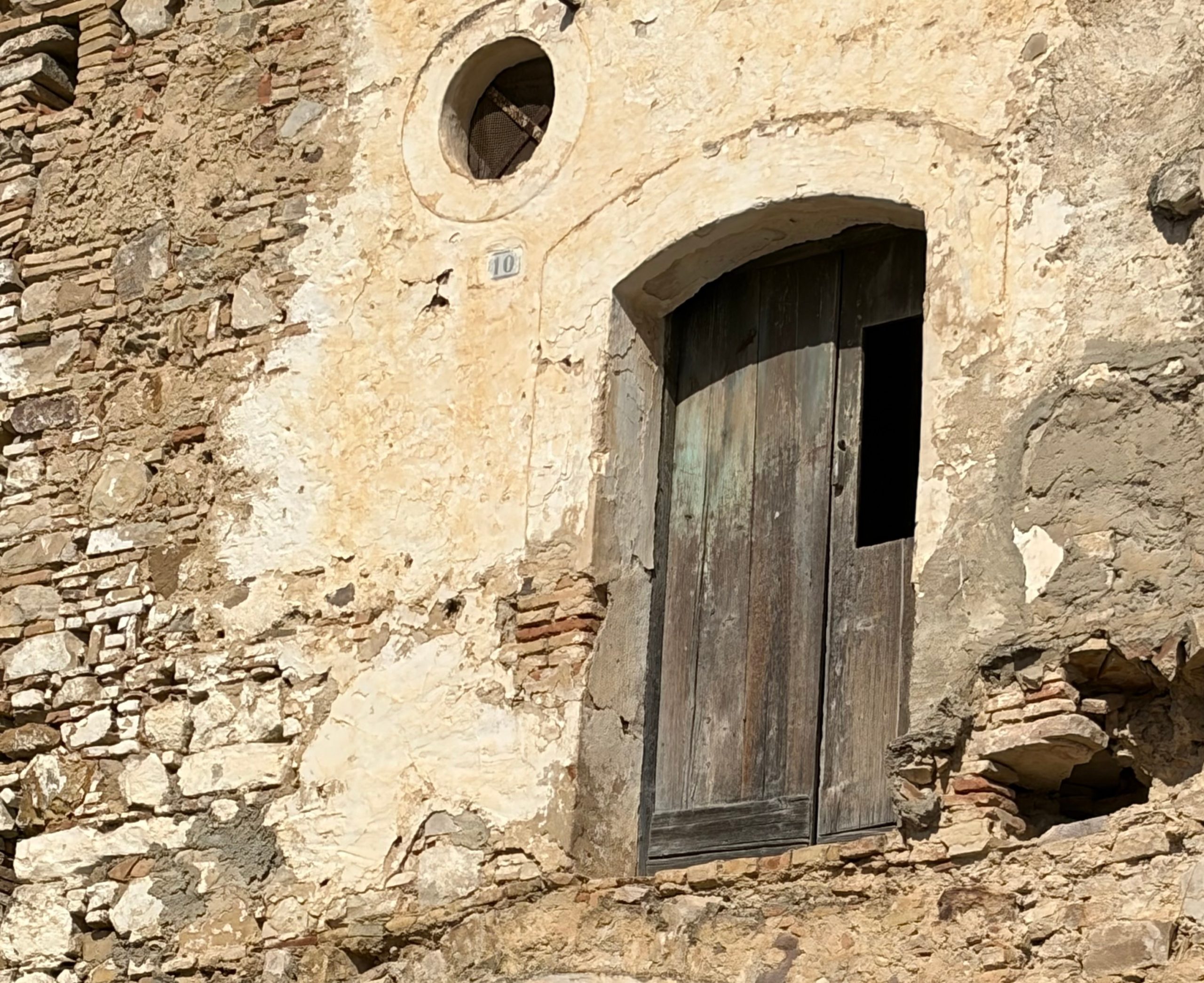
I also saw how important it was for the guests to find a physical trace of their past. Walking the streets of old Craco felt heavy. Some of the houses are gone, swallowed by the landslide. But we found a civic number, a faded 10 on the top corner of a door, and that was enough to orient ourselves on the street where their family once lived.
That day in Craco, it felt as if this dry, seemingly inhospitable land had left crumbs for my guests.
We return to Basilicata in the spring and fall of 2027. If this is the land of your ancestors and you’ve felt the pull to finally go, join the waitlist, and you’ll hear about the dates first.
Originally published on Giuditta’s Substack →
Get a new story like this every two weeks.
SubscribeYou’re subscribed!
A welcome email from me is on its way — usually within a few minutes. If it landed in Spam or Junk, please mark it “Not spam” or move it to your Inbox.
Can I ask you a favor? When it arrives, just reply “received!” — that’s how I’ll know it reached you.
Nothing after 15 minutes? Search your Spam or Junk folder for “numenvia”, or write to me and I’ll sort it out.
Thank you!
— Giuditta ()
PS: Add my email () to your contacts so my letters reach your inbox.
Unsubscribe anytime; I’ll never spam you or share your address.