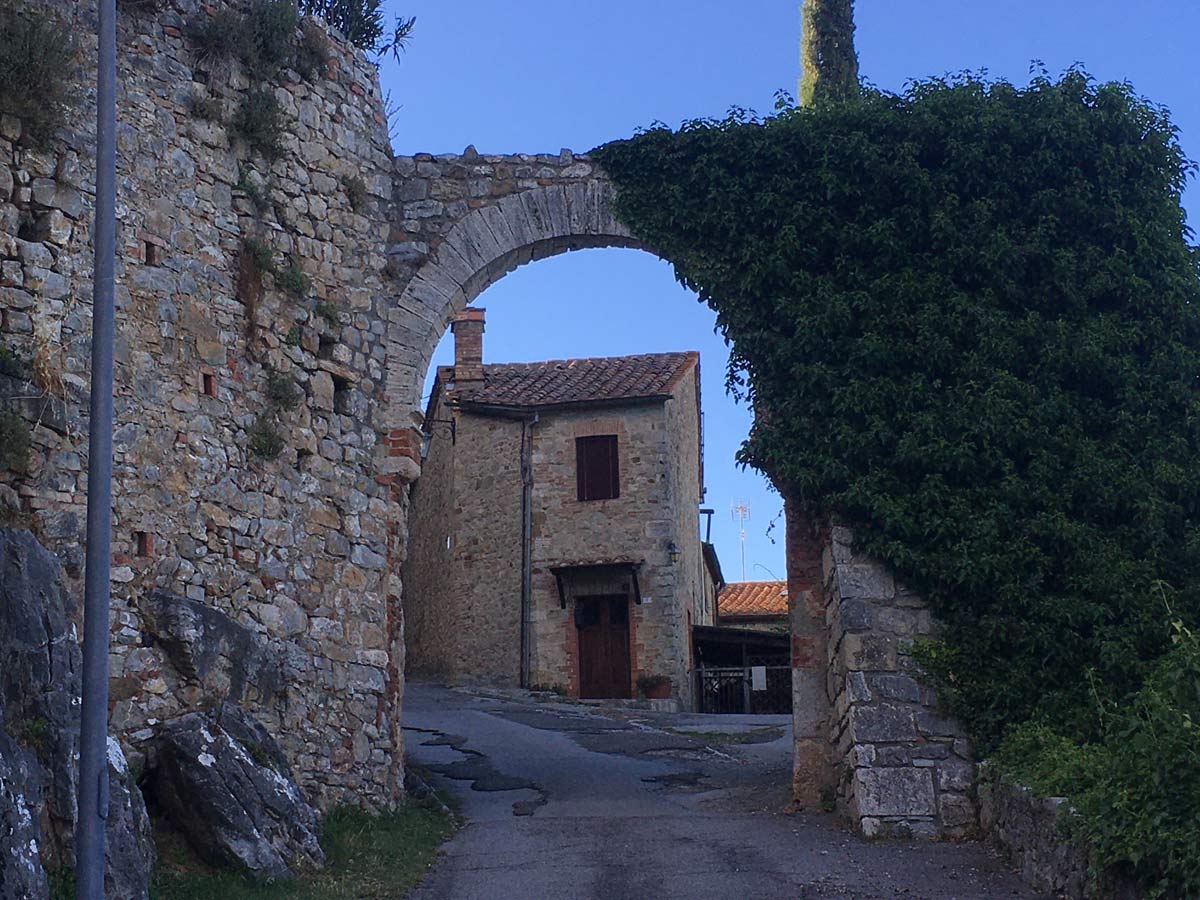
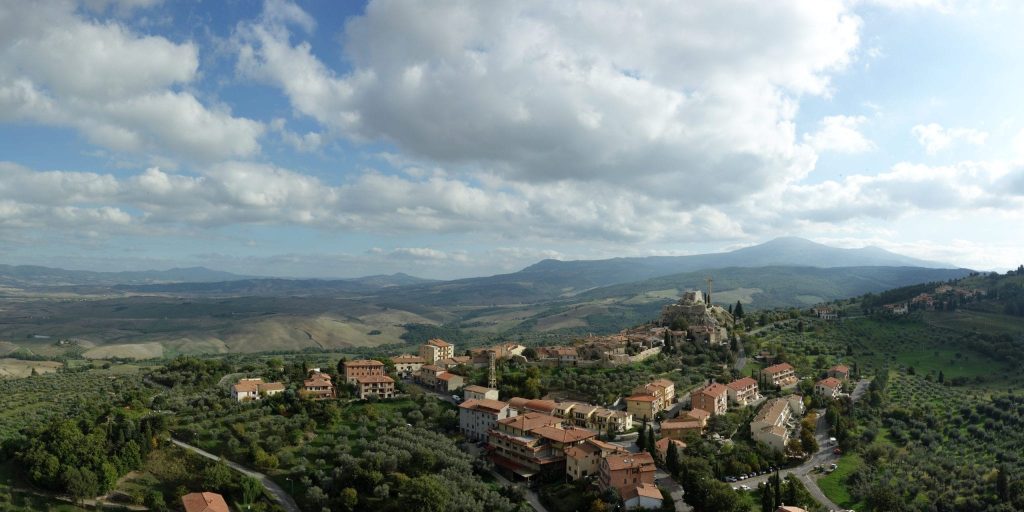
Castiglione d’Orcia is a small, largely unvisited medieval hill town perched above the Orcia valley on the lower slopes of Monte Amiata. Quieter than neighbouring Pienza or Bagno Vignoni.
Piazza il Vecchietta
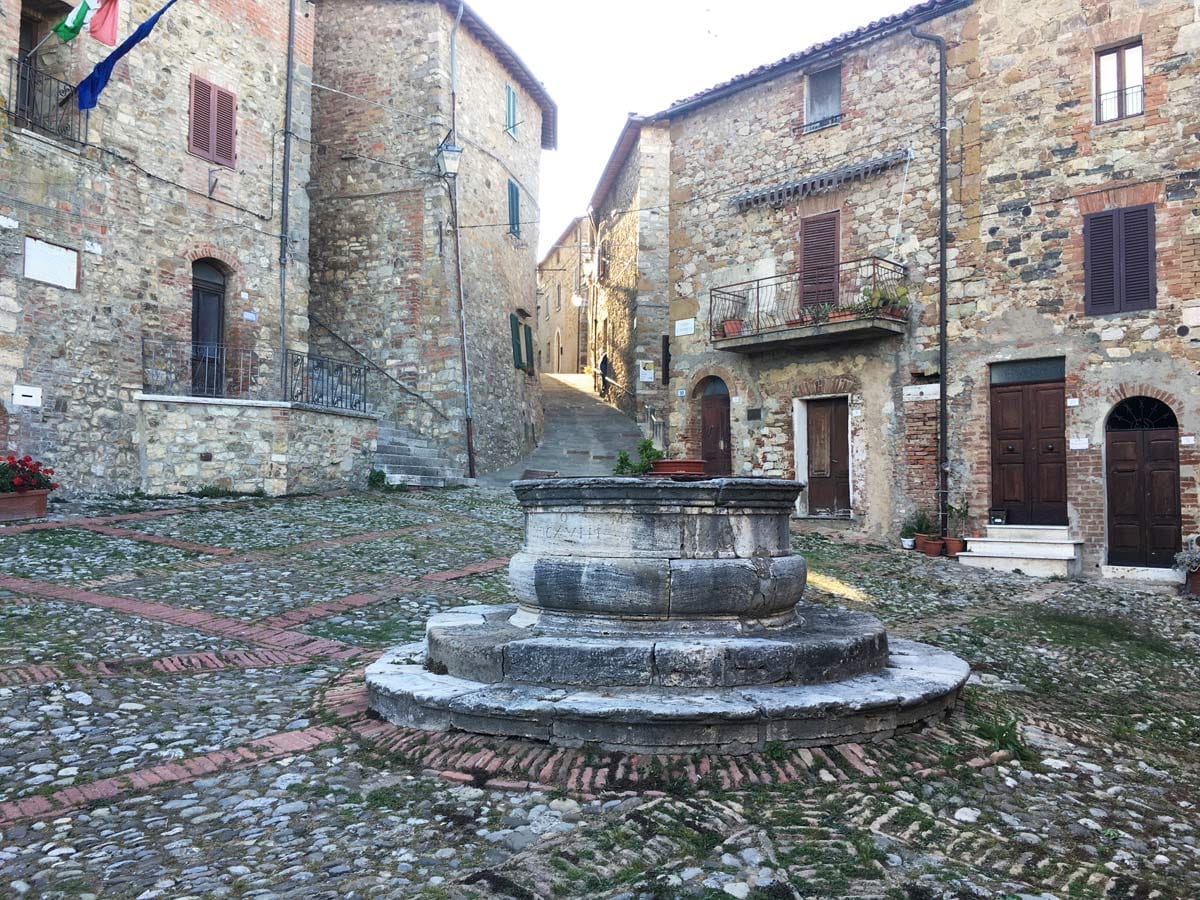
The compact, steeply sloping Piazza il Vecchietta is triangular, paved in cobblestones and red brick, centred on a travertine well-cistern from 1618. It is named for Lorenzo di Pietro il Vecchietta (1412–1480), painter, sculptor, goldsmith, architect — one of the outstanding artists of 15th-century Siena.
Sala d’Arte San Giovanni
A small museum housing three Sienese masterpieces: a Simone Martini Madonna col Bambino (1320–25) in which the Christ child holds a swallow; a Vecchietta Madonna with Child; and a Giovanni di Paolo Madonna with Child.
Rocca di Tentennano
A short walk below Castiglione brings you to the medieval hamlet of Rocca d’Orcia, and above it on a sheer limestone spur, the dramatic Rocca di Tentennano — the fortress you can see from Hotel La Posta’s thermal pools in Bagno Vignoni. In 1207, its lords issued the Charta Libertatis — one of the earliest constitutional charters in European history. Saint Catherine of Siena visited in 1367. Legend holds the fortress was never taken by force — only through treachery.