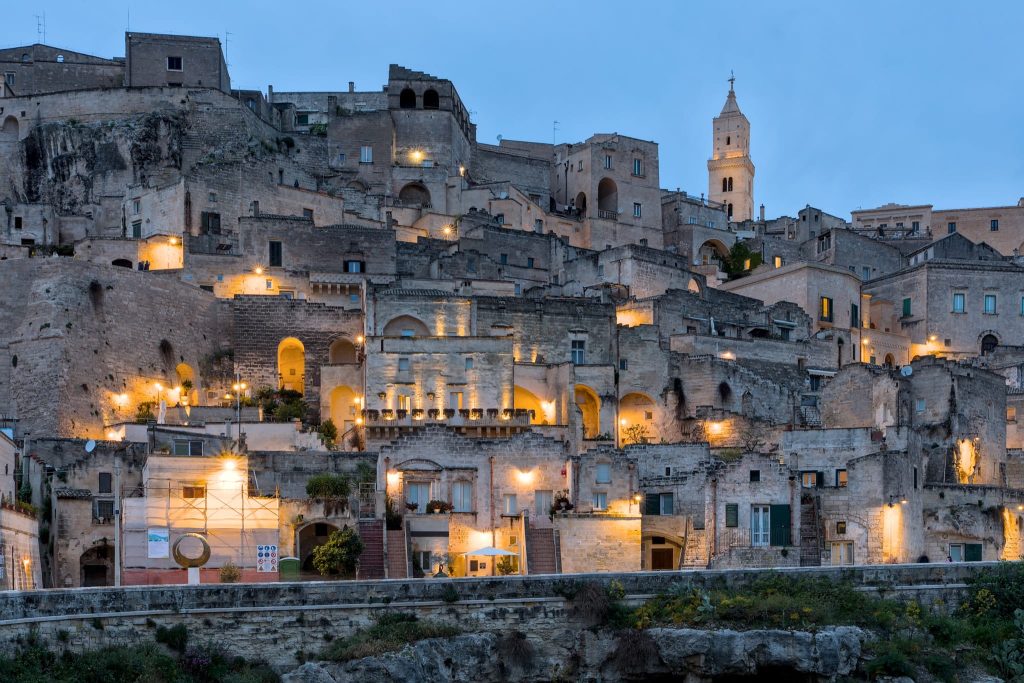
The Sassi of Matera at blue hour

Matera

Benjamin Smith, CC BY-SA 4.0, via Wikimedia Commons
Why we love this place

I visited Matera for the first time in November 2025. As an Italian seeing the white walls of this town for the first time, it didn't feel like Italy at all — for a moment, it felt closer to Morocco or Algeria. Its beauty took my breath away.

— Giuditta

The cave dwellings of Matera contain evidence that people have been continuously living in them since at least 7,000 BC. Alongside Aleppo and Jericho, Matera stands as one of the oldest continuously inhabited settlements on earth.
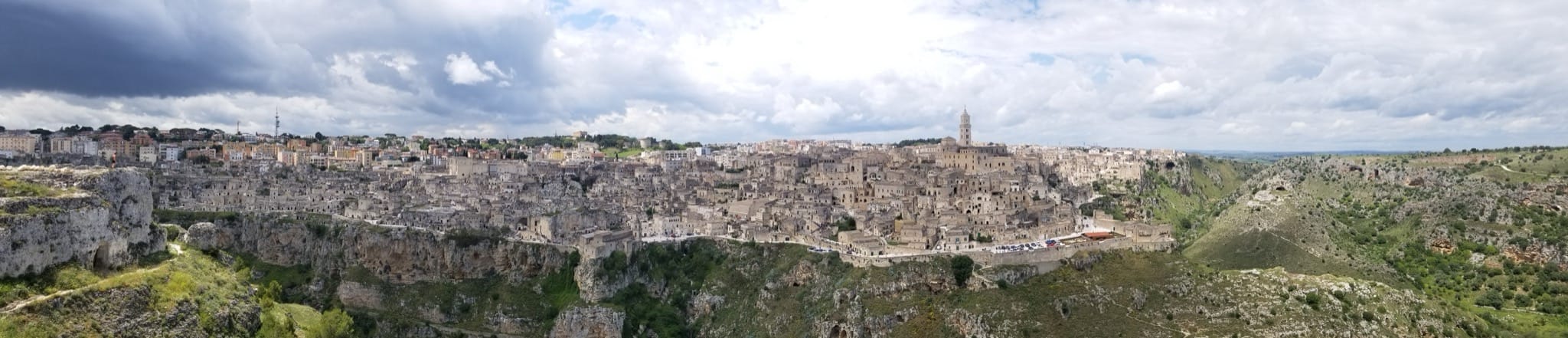
Panoramic view of the two Sassi of Matera
Tinss, CC BY-SA 4.0, via Wikimedia Commons

The Sassi

By the end of the eighteenth century, a stark physical class boundary had formed: the overcrowded Sassi housed the peasants while the elite had long since moved to the Piano above. By the 20th century, overpopulation caused the collapse of the water and sewage systems, leading to illness, infant mortality and desperate poverty. Of course thousands of people emigrated.
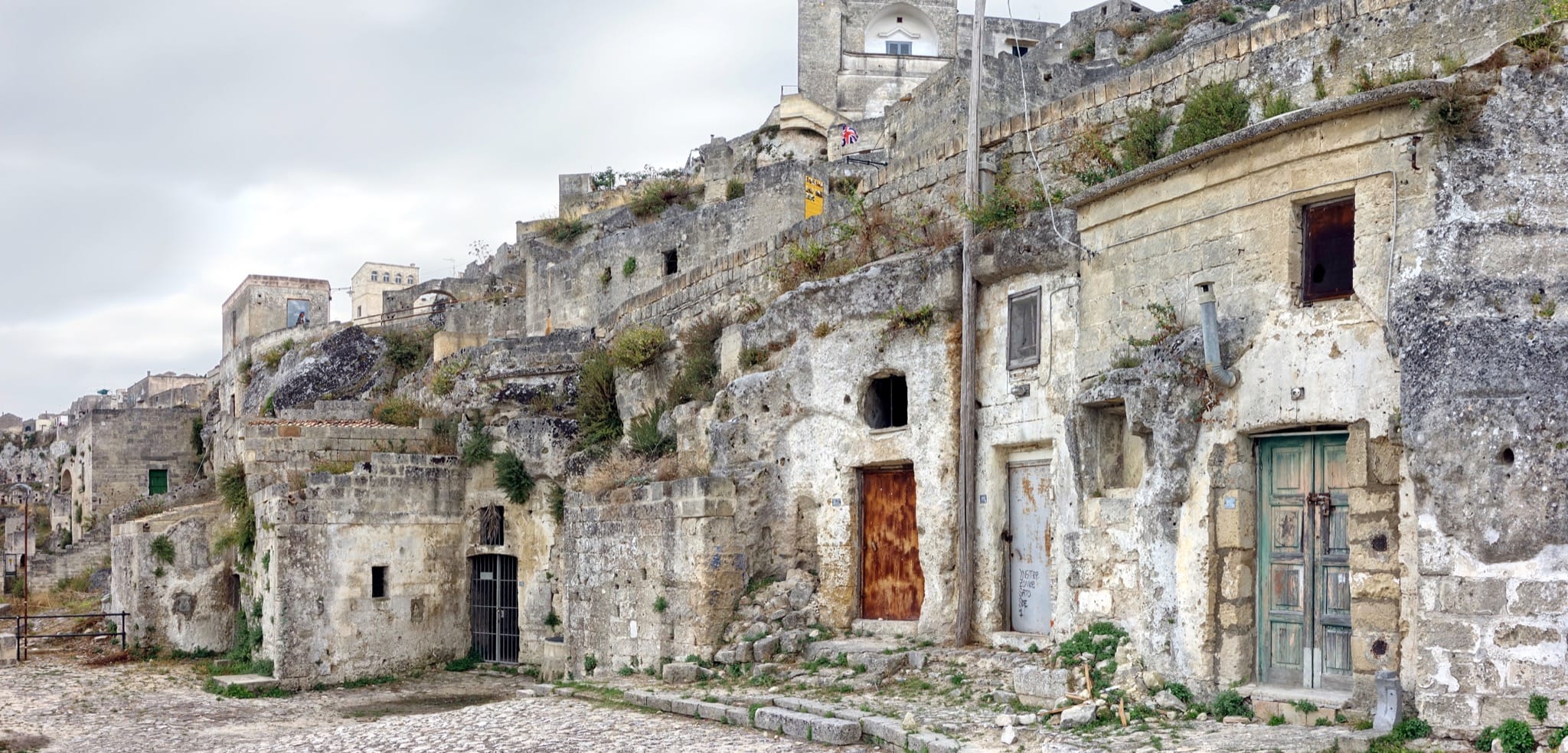
Traditional cave dwellings in the Sassi of Matera
Velvet, CC BY-SA 4.0, via Wikimedia Commons

America on the Wall

Carlo Levi observed that the most frequent decorations in the peasant cave homes of Lucania were an American dollar, a photograph of President Roosevelt, and the Madonna di Viggiano. As he wrote: “New York, rather than Rome or Naples, would be the real capital of the peasants of Lucania, if these men without a country could have a capital at all.”

View of the Sassi of Matera
Photo by Giuditta

The Shame of Italy

Carlo Levi’s 1945 memoir Christ Stopped at Eboli caused an uproar. Prime Minister De Gasperi vowed to clear up “the shame of Italy.” Beginning in 1954, the city’s population of roughly 16,000 was slowly moved into housing projects. The Sassi became the largest completely abandoned historical centre in Italy.

View of the Sassi from the church of Sant'Agostino
Photo by Benjamin Smith, CC BY-SA 4.0, via Wikimedia Commons

From Shame to UNESCO

In 1993 Matera was made a UNESCO World Heritage Site. In 2019 it was European Capital of Culture. Matera did not just survive. It was vindicated.

View of Matera from the Belvedere Murgia Timone across the ravine
Photo by Benjamin Smith, CC BY-SA 4.0, via Wikimedia Commons
View of Matera from Via Santa Cesarea
Photo by Benjamin Smith, CC BY-SA 4.0, via Wikimedia Commons

On our tour

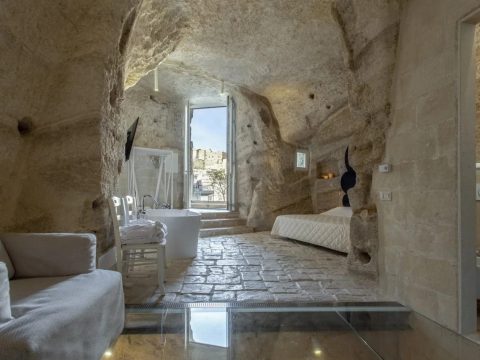
You spend two nights in Matera, staying at Dimore dell’Idris — a hotel carved out of the historic Sassi rock. You explore the cave dwellings with local guide Silvio, visit a traditional casa grotta, and take a hands-on bread-making class at Il Forno di Gennaro, a family bakery that has been baking since 1890.

View of Matera from trail 406 across the ravine
Photo by Benjamin Smith, CC BY-SA 4.0, via Wikimedia Commons
The Tibetan bridge crossing the ravine at Matera
Photo by Benjamin Smith, CC BY-SA 4.0, via Wikimedia Commons

Let me take care of curating the best possible experience for you. — Giuditta

282.5ms