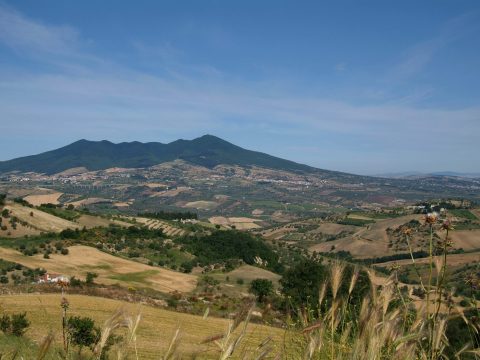
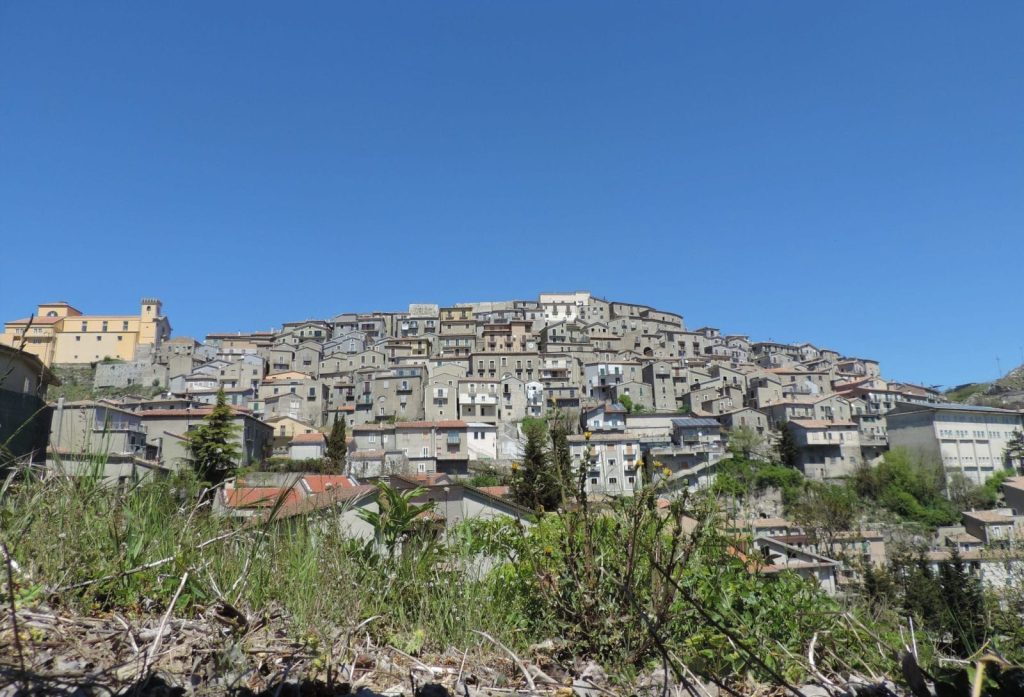
Castelgrande is a small mountain town in the northwestern interior of Basilicata, perched on a cliff edge with a panoramic backdrop of mountains. Only 740 people live here — one of the smallest comuni in the region. Terraced buildings coil tightly uphill to the Church of Santa Maria Assunta at the summit.

A National Geographic Village
Castelgrande was featured in National Geographic for its culinary heritage — an article titled “Join a homegrown family feast in Italy’s Basilicata region” that captured what makes this place extraordinary. The food here is the food of the mountains: millefiori honey from mountain wildflowers, peperoni cruschi, mountain beans, black chickpeas, and Aglianico del Vulture wines.
Former mayor Alberto Muro has pioneered saffron cultivation in Castelgrande, working with researchers to prove that the town’s dry, well-drained soil is ideal for the crop. Basilicòre, a sleek modern boutique in the historic centre, showcases regional products.

Origins
The town dates to the early Middle Ages (9th–10th century), possibly founded after Saracen devastation of nearby settlements. It appears in Frederick II’s Statutum de riparatione castrorum (1231–1240), listed as responsible for maintaining the castle of neighbouring Pescopagano.
The Diaspora Connection
The story of Castelgrande is the story of steady emigration. Each generation was lured from subsistence farming to Rome, Milan, and far beyond — Montreal, London, and across the Americas. But the culinary heritage draws emigrant families back every summer.
The Associazione Maria SS. di Costantinopoli di Castelgrande in Montreal, led by Nicola Pennimpede, maintains strong ties between the diaspora and the village. They are active on social media and keep the connection alive through cultural events and return visits.