In the summer of 2000, Elena Fucci graduated from high school in Basilicata with plans to study genetic engineering. That same summer, her parents decided to sell the vineyards and the house where she grew up. She didn’t want to let it go, so she chose to study enology instead.
Elena is not the first person I’ve met who made a choice like this. That’s the thread I can’t let go — people who looked at the obvious path and turned away from it, toward something real and difficult. I see myself in them, because I did the same thing.
She isn’t a figlia d’arte — there was no family winemaking tradition. The grapes from those vineyards had always been sold to other producers. So Elena moved to Pisa to study enology, to become the first to actually make wine.
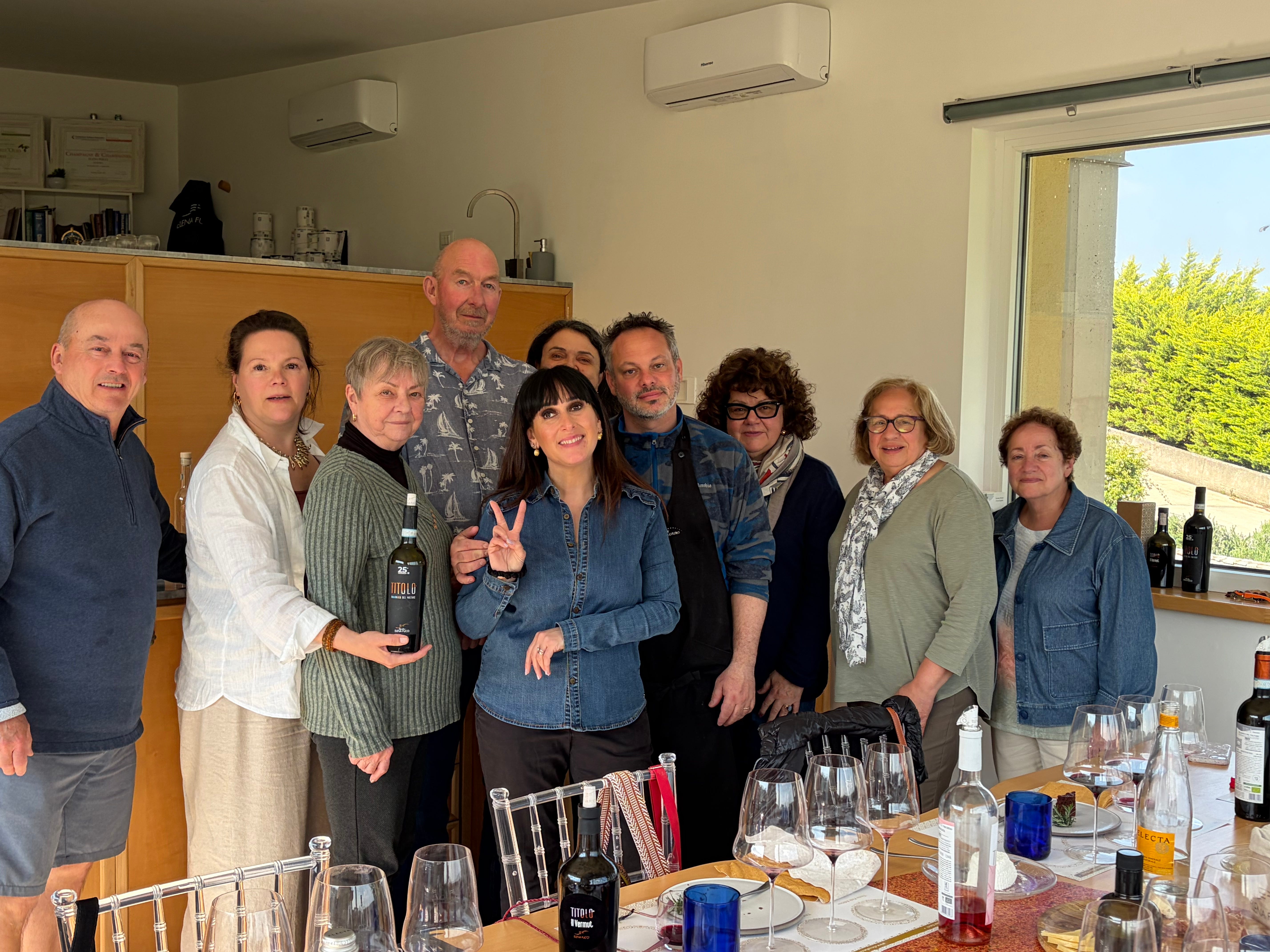
She defines her wine philosophy as modern but not modernist. Modern, because her wine, Titolo, is her personal interpretation of Aglianico del Vulture. Not modernist, because she deeply respects the terroir — that concept that encompasses the soil, the weather, the culture, and story of a place. The history that’s rooted in the soil.
Her vision doesn’t manifest only in her wine, but in the cellar as well. Built entirely on bio-architectural principles, it uses only recycled materials, no air conditioning, and rainwater to cool the fermentation tanks. One wall was deliberately kept exposed — layer upon layer of volcanic eruptions, the ash, the clay, all of it visible. The terroir, literally, is in the walls. It smells like soil and earth. Like a volcano. The winery is now completely energy self-sufficient.
One of her greatest supporters was her grandfather Generoso — one of three generations of men in her family who believed in what she was building. He had moved to Venezuela as a child before returning to Basilicata later in life. When Elena, fresh from her enology degree, came to him in the vineyards with a new technique, he laughed and said, “Seriously, Elena! I’ve been working here all my life — why haven’t I thought of this before?”
To respect the terroir of Vulture, the extinct volcano, irrigation is forbidden, even in the summer. As Elena put it, you can irrigate the desert and grow tomatoes. But those tomatoes will never be the expression of the desert.
If you’re ever in the area of Barile, in Basilicata, go and listen to her story.
Would you have had the courage to stay?
I hope I would have.
Originally published on Giuditta’s Substack →
Get a new story like this every two weeks.
SubscribeYou’re subscribed!
A welcome email should arrive within the next minute or so. If you don’t receive the email, please check your spam folder.
Can I ask you to do me a favor? Please click the “confirm” button in the email. That way, I’ll know it reached you.
Feel free to reach out to me with any questions.
Thank you!
— Giuditta ()
PS: Add my email () to your contacts and you’re guaranteed to receive my newsletter.
Unsubscribe anytime; I’ll never spam you or share your address.