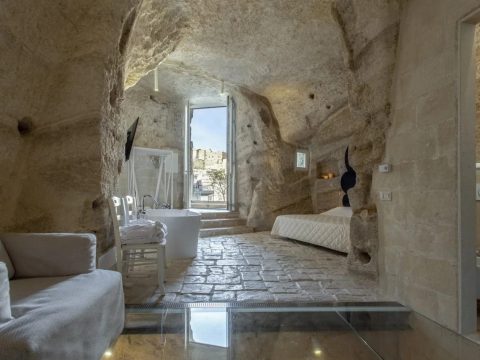
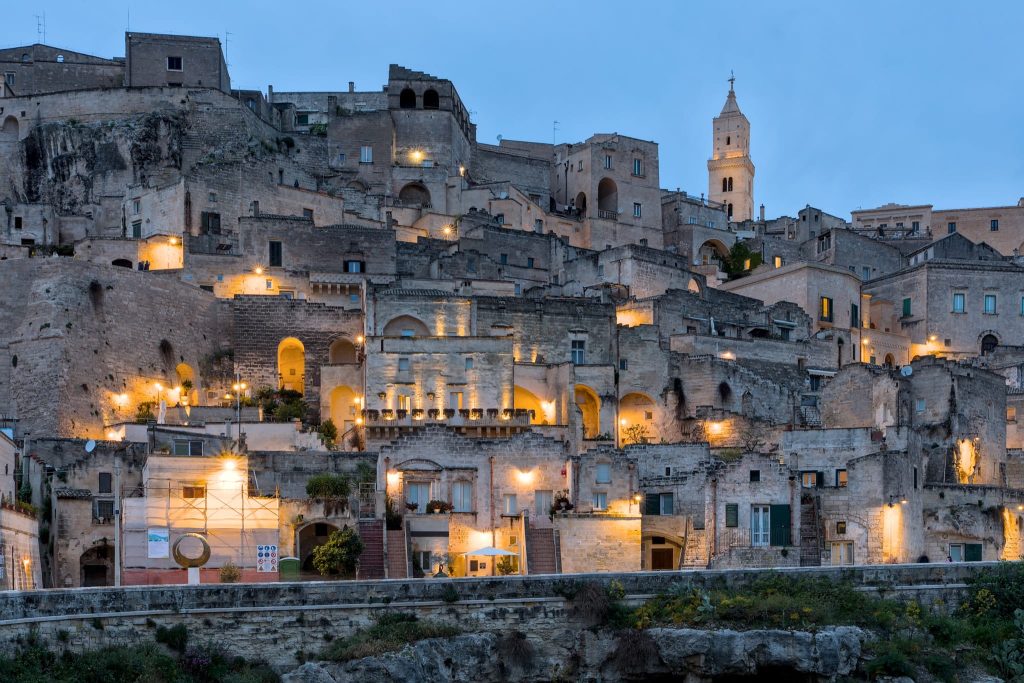
The cave dwellings of Matera contain evidence that people have been continuously living in them since at least 7,000 BC. Alongside Aleppo and Jericho, Matera stands as one of the oldest continuously inhabited settlements on earth.
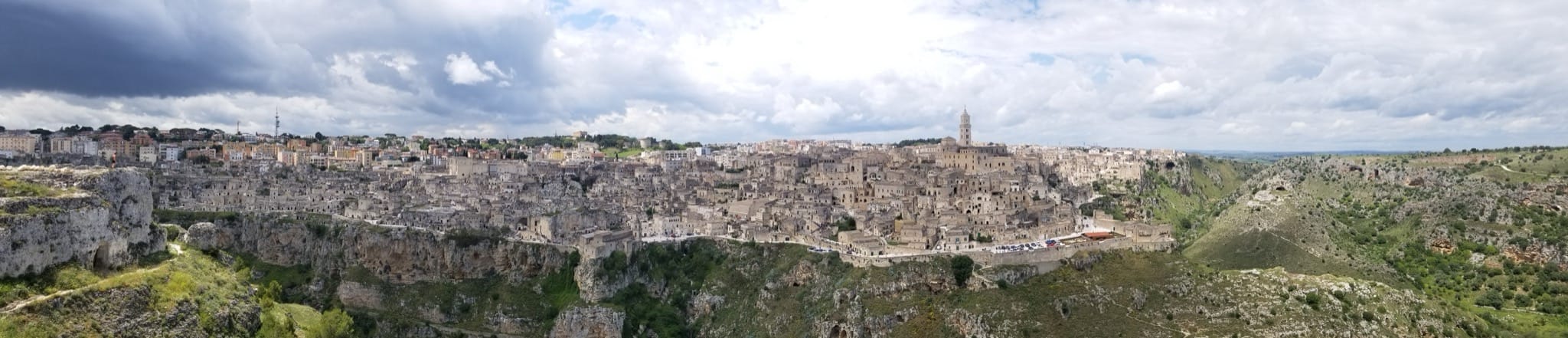
The Sassi
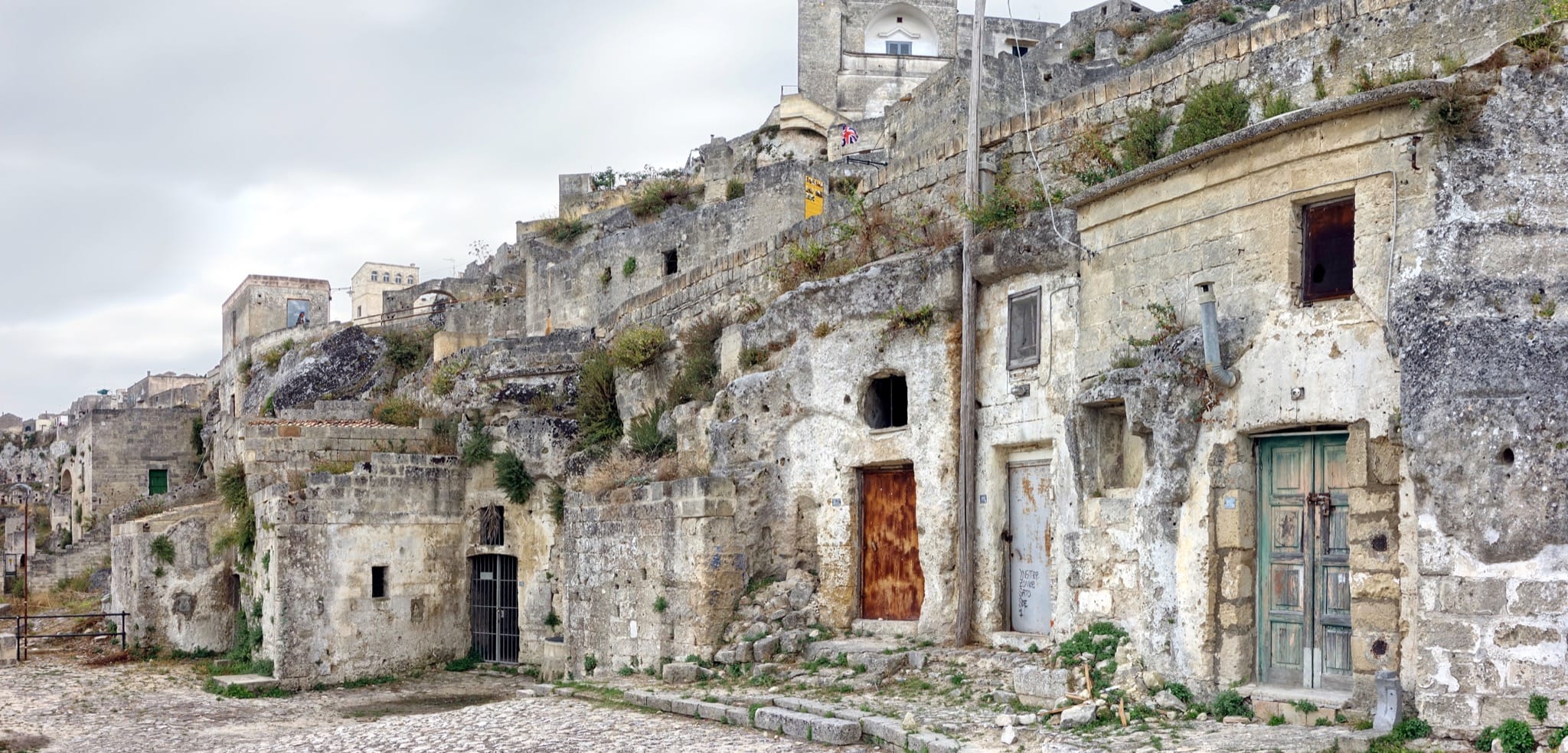
By the end of the eighteenth century, a stark physical class boundary had formed: the overcrowded Sassi housed the peasants while the elite had long since moved to the Piano above. By the 20th century, overpopulation caused the collapse of the water and sewage systems, leading to illness, infant mortality and desperate poverty. Of course thousands of people emigrated.
America on the Wall
Carlo Levi observed that the most frequent decorations in the peasant cave homes of Lucania were an American dollar, a photograph of President Roosevelt, and the Madonna di Viggiano. As he wrote: “New York, rather than Rome or Naples, would be the real capital of the peasants of Lucania, if these men without a country could have a capital at all.”

The Shame of Italy
Carlo Levi’s 1945 memoir Christ Stopped at Eboli caused an uproar. Prime Minister De Gasperi vowed to clear up “the shame of Italy.” Beginning in 1954, the city’s population of roughly 16,000 was slowly moved into housing projects. The Sassi became the largest completely abandoned historical centre in Italy.

From Shame to UNESCO
In 1993 Matera was made a UNESCO World Heritage Site. In 2019 it was European Capital of Culture. Matera did not just survive. It was vindicated.