
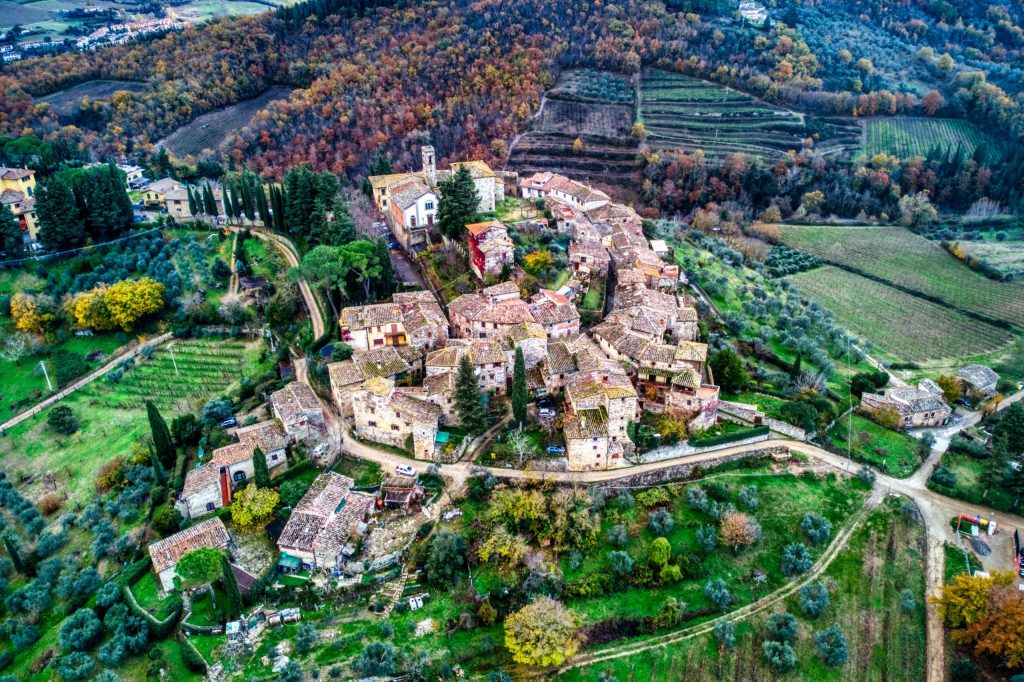
Montefioralle dates to at least 931, when a feudal castle was established on the hilltop. The name comes from monte (hill) and ficalle (figs) — after the fig trees that grew on the surrounding slopes. It was changed to Montefioralle around 1630.
The village is built on an elliptical plan around the original cassero, still enclosed within its defensive walls. A single circular street follows the inner ring, lined with stone houses, ancient arcades, and small squares. Houses fill the space between two wall circuits, and remnants of medieval towers survive as private residences.

The Vespucci Connection
A building on the main street bears the Vespucci coat of arms — featuring a vespa, a wasp — and is identified as the residence of Amerigo Vespucci’s family, the navigator after whom the Americas were named. Nearby, the Castle of Verrazzano, birthplace of Giovanni da Verrazzano (1485).


A Medieval Village
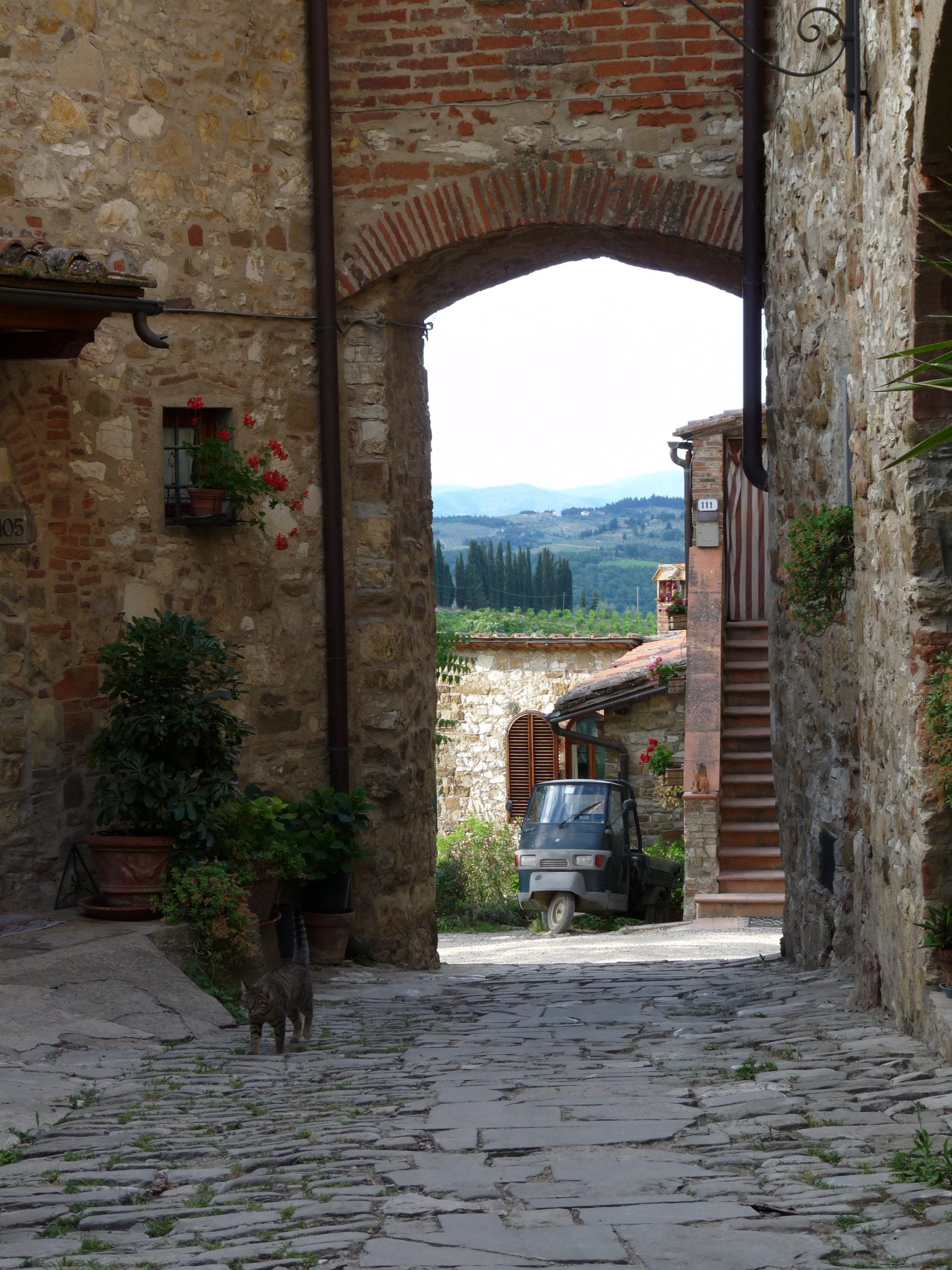
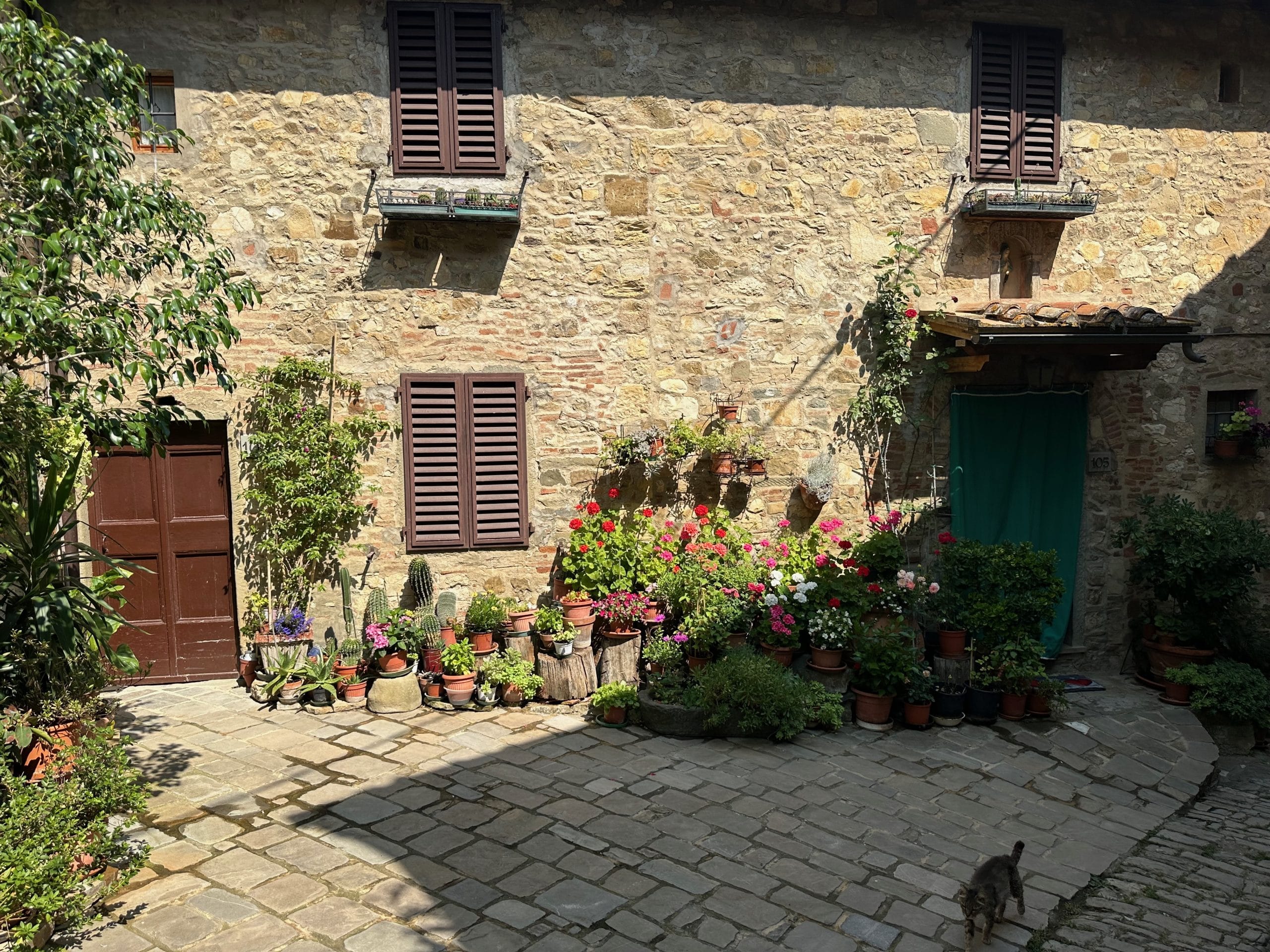
Montefioralle was recognised as one of the Borghi più Belli d’Italia in 2022. It is almost entirely car-free. It comes alive during summer and during annual festivals: the Sagra delle Frittelle on Saint Joseph’s Day, featuring traditional rice fritters from a centuries-old communal recipe, and I Vini del Castello, when local Chianti Classico producers set up along the streets for tastings.
You can walk up from Greve in Chianti — 1.5 km through olive groves and vineyards, about 25 to 40 minutes. The views will take your breath away.