Ever wonder how I put together a new tour of the Tuscan countryside?
On my last trip to Italy, I was researching a new itinerary in the Val d’Orcia region, south of Siena. In this next set of videos, I’m going to bring you along while I walk through green rolling hills, explore ancient villages, and eat amazing food, looking for the perfect experiences to share with my guests on my upcoming Val d’Orcia tour.
You’ll get to see all of this for yourself, but here’s what I’m looking for:
- The chance to get to know people who live and work in that place, and who have a deep commitment to it
- Beautiful scenery that fills you with wonder
- Convivial experiences that you’ll treasure
- Delicious food
- Learning how food is prepared by getting your hands dirty and doing it yourself. Not too dirty — this is a vacation! — but enough that the food is so much more meaningful when you eat it later.
Have you ever been to Val d’Orcia? What was the highlight for you?
Transcript
Ever wonder how I put together a new tour of the Tuscan countryside?
On my last trip to Italy, I was researching a new itinerary of the Val d’Orcia region, which is the area south of Siena. In the next set of videos, I’m going to bring you along with me while I walk through these gorgeous green rolling hills, explore ancient villages, eat delicious food, looking for all the perfect experiences that I can share with my guests on my upcoming Val d’Orcia tour.
You will get to see all of this by yourself, but here is what I was looking for: the chance to get to know people who live and work in the area and have a really deep commitment to it, convivial experiences and amazing food, beautiful scenery that fills you with wonder and awe, and also the chance to get your hands dirty by preparing food with local artisans and makers. Not too dirty of course, because this is still a vacation, but enough to make the food that you eat way more meaningful.
When I think of Val d’Orcia, I think of green landscapes suffused with golden light. I remember the silence, but mostly I remember the people, because the people are always the most important.
But let’s start from the beginning. My mother, Noah, and I climbed into her old Fiat Panda. I’d never been to Val d’Orcia before, but I heard so much about it. I grew up in Chianti, surrounded by vineyards, olive groves, and oak woods, while Val d’Orcia has endless pastures and wheat fields — but mostly I was excited to try the experiences I’d arranged. I always test out every experience myself before I include it in a tour, and this trip was extra special because we’d be visiting my brother-in-law’s family. His uncle owns a truffle farm and so I wanted to try his truffles.
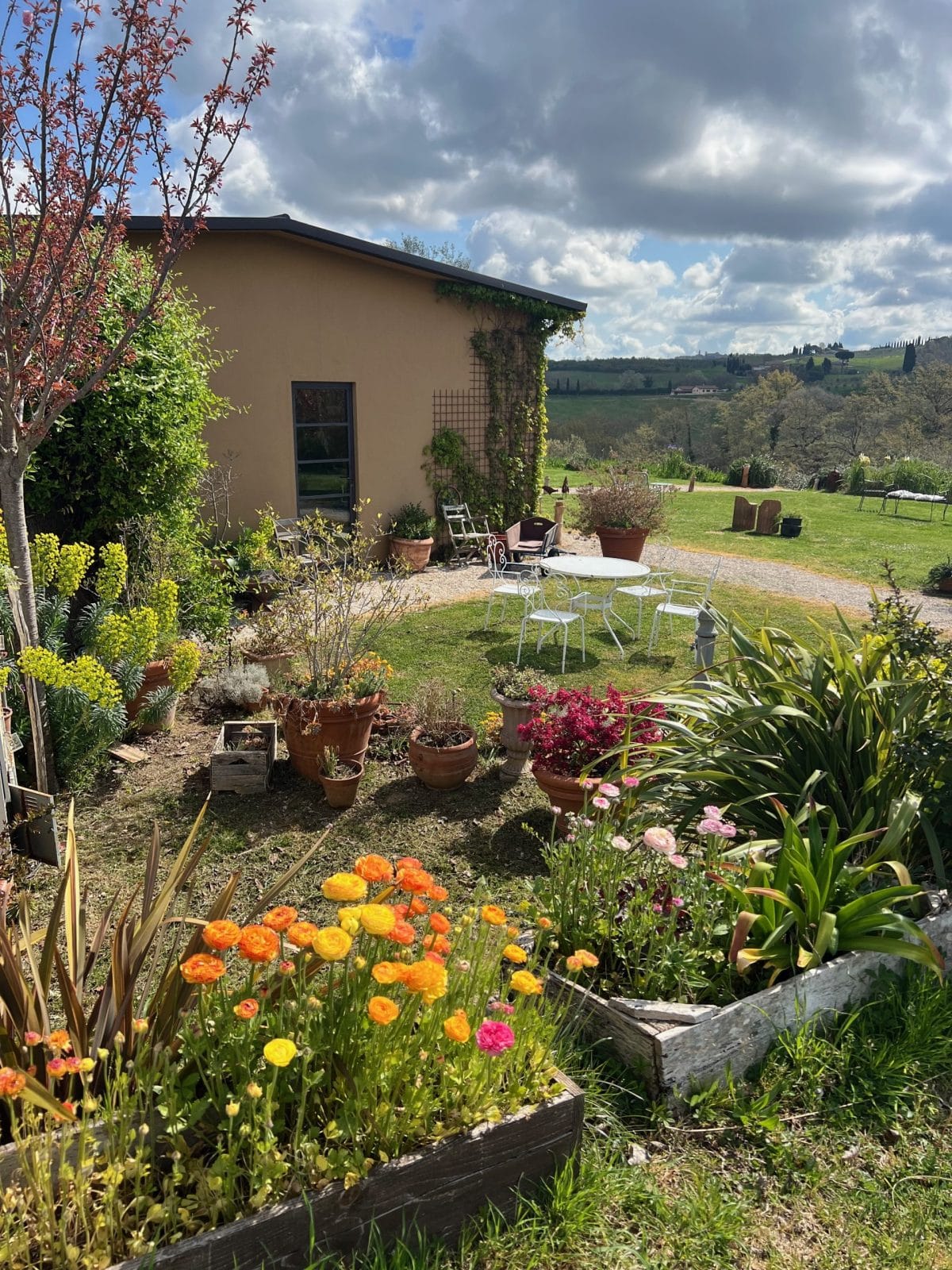
It was a beautiful drive with the vineyards of Chianti giving way to the open vistas of Val d’Orcia, and after an hour and a half, we turned onto a dirt road and spotted our agriturismo on top of a hill.
I picked this place partly for its story. The owners bought a deserted sharecroppers’ farm in 1980 and turned it into an organic farm at a time when nobody was doing organic farming. They had the vision to turn it into a hospitality project at a time when tourism was almost unknown in Val d’Orcia. But I also picked it because it’s quiet and surrounded by open fields. I purposefully don’t pack my tours with activities because I believe it’s important for my guests to have unstructured time to relax and recharge. And when I saw the old terracotta farmhouse with vines climbing up the facade, I knew it would be perfect.
This was our room — simple but elegant, with a tiled floor and beige walls painted with this flower motif. And through the glass door, I had a view of the beautiful Val d’Orcia hills.
We walked down to dinner, which is in the main house, and we were quite hungry. I asked for a vegetarian dinner, not only because I’m vegetarian, but also because it’s a good test of the flexibility of a place in accommodating dietary preferences. And sometimes when I ask for vegetarian menus, I’m underwhelmed. This is especially true in Tuscany, where meat is at the center of the show — but not here.
The antipasto was fresh artichokes with local raw cheese and walnuts. One of the reasons to go to Tuscany in spring is because it’s artichoke season. And then I had these delicious homemade tagliatelle with butter and lemon zest. It was so flavorful. You could tell it was made with stone-mill flour because of the rustic texture. And as a second piatto, I had a squash soufflé with roasted sweet potatoes and a chopped salad made with broccoli, purple cabbage, cauliflower, and carrots. It was really unusual and delicious.
After that delicious dinner, we drove back to the smaller farmhouse where we were staying. And this for me was the highlight of the day — to watch Noah running freely in the open field, the golden light, and being surrounded by the silence. I like to include more opportunities for moments like this during the tour because I believe they bring a sense of awe and wonder from experiencing the world free from human noise pollution that we are so used to. And the beauty of awe, if you think about it, lies in its ability to shift our focus from ourselves to something greater. And isn’t this why we travel after all?
The next morning was bright and sunny. This time we walked to the main farmhouse for breakfast. This is probably one of the most peaceful morning walks I’ve ever done. The view is just gorgeous. I noticed the night before during dinner that the tables were decorated with this tasteful arrangement of fresh flowers from their garden. And they even used their flowers to decorate their dishes, so of course I wanted to take a look at their flower garden. They have so many things — these are all the edible flowers.
The breakfast was perfect and reinforced that the owners know how to take care of their guests. There were beautiful homemade cakes with edible flowers, homemade jams that are impossible to find anywhere else — like this one made with pears, peppers, and saffron — and then raw cheese, cold cuts, different kinds of sourdough bread that they make in the morning, muesli, milk, and yogurt from a nearby farm. I love this idea that farm to table is not just a slogan but a way of life. I would have loved to sit sipping cappuccinos and chatting with them.
Originally published on Giuditta’s Substack →
Get a new story like this every two weeks.
SubscribeYou’re subscribed!
A welcome email should arrive within the next minute or so. If you don’t receive the email, please check your spam folder.
Can I ask you to do me a favor? Please click the “confirm” button in the email. That way, I’ll know it reached you.
Feel free to reach out to me with any questions.
Thank you!
— Giuditta ()
PS: Add my email () to your contacts and you’re guaranteed to receive my newsletter.
Unsubscribe anytime; I’ll never spam you or share your address.
