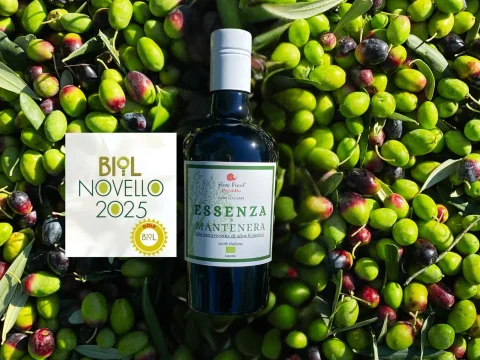
“You need a place, if only for the pleasure of leaving it. A place means not being alone —knowing that in the people, in the plants, in the earth, there is something of yours, that even when you’re not there, it stays and waits for you.”
— Cesare Pavese, La luna e i falò, 1950.
In Italian, ‘place’ is paese—it means village, hometown, place of origin. But for Pavese, paese is also the place you choose to make your home.
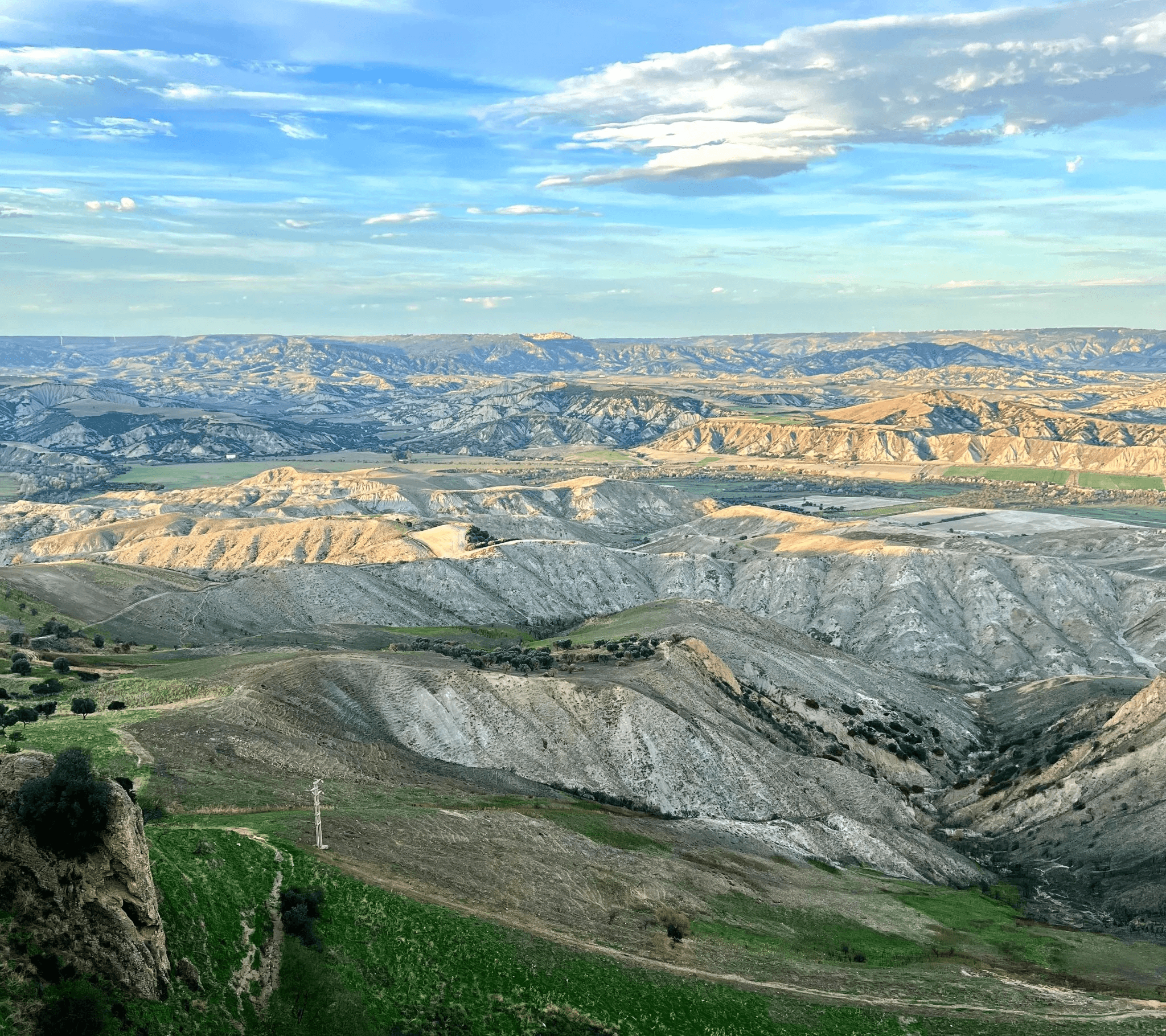
I wasn’t prepared for Basilicata. I grew up in the green rolling hills of Tuscany, where the landscape alternates between olive groves and vineyards. It’s soft, picturesque.
Basilicata is nothing like that — sharp eroded ridges of white clay with villages perched on top, spires of rock with villages wrapped around them. So much of it is empty. Abandoned towns. Silence.
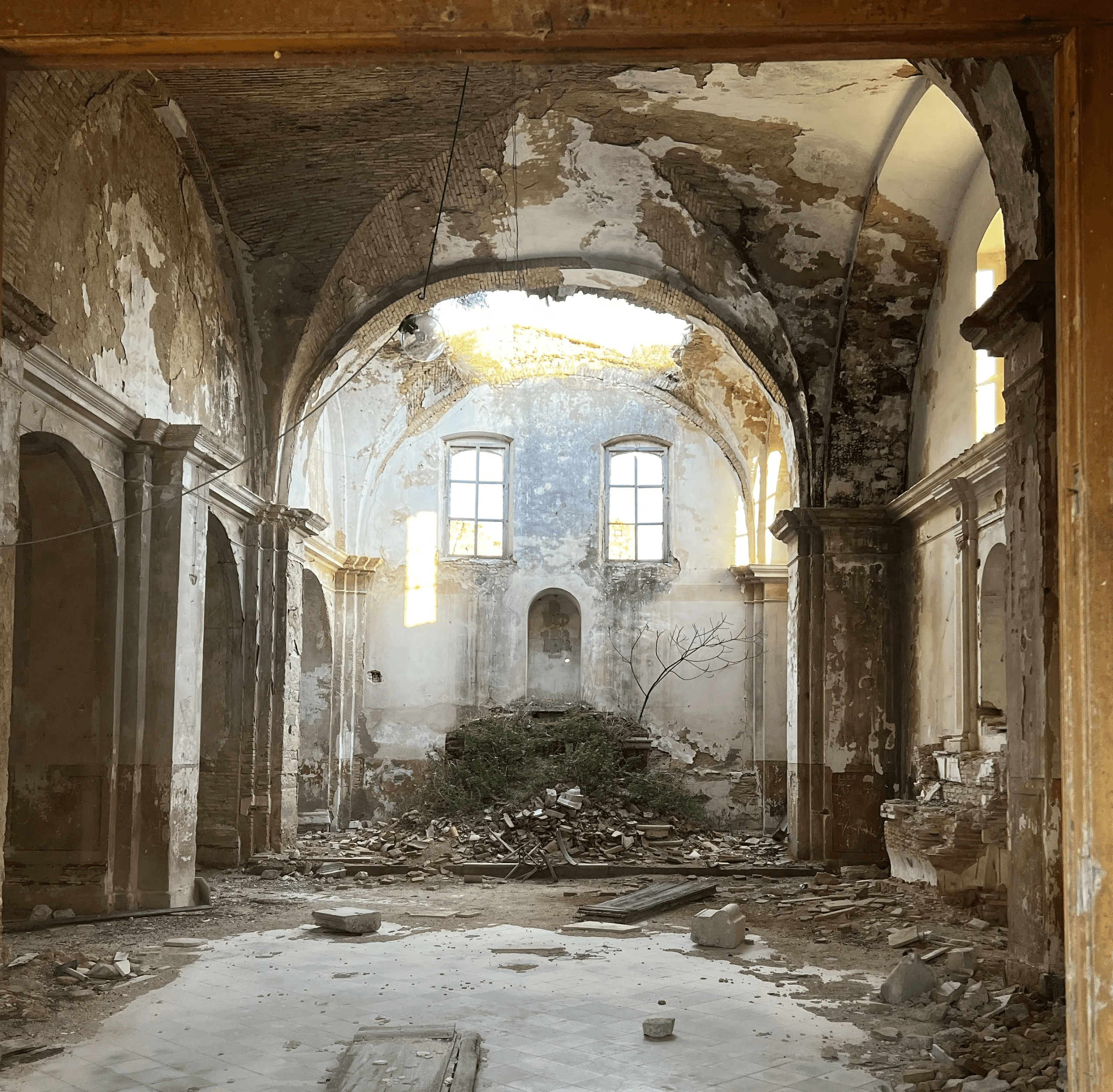
I remember driving around its countryside with Adele, and thinking, where is everybody?
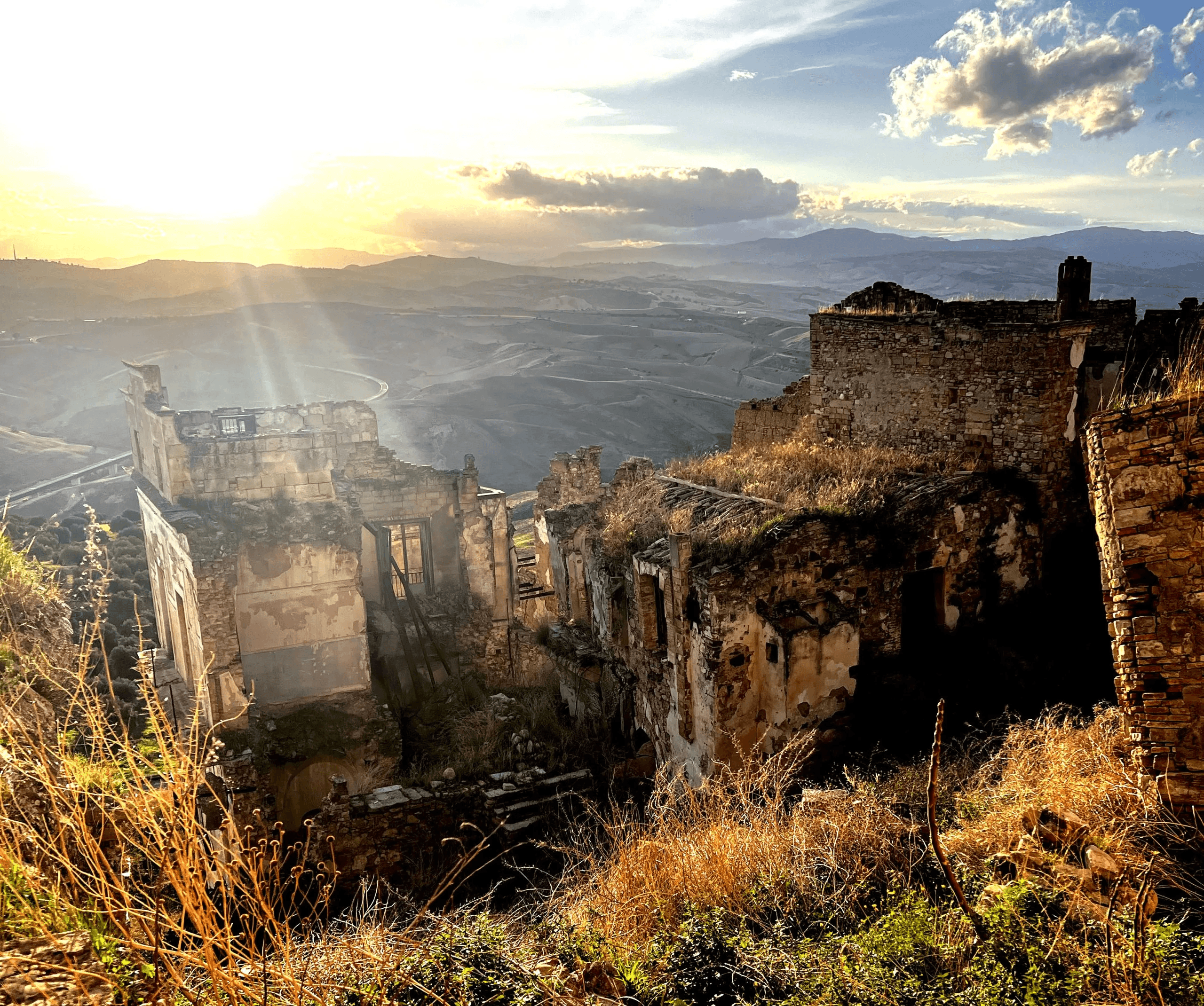
In Tuscany, wherever you look, there’s a medieval village or an old farmhouse. But standing at the top of the ghost town of Craco, all you see are bare hills-the calanchi-all the way to the horizon.
But then I met the people who choose to live in this land. Elena Fucci, the winemaker who changed her career trajectory and came back to Basilicata when her grandfather’s vineyards were about to be sold. Now she makes world-famous wine from those vines–on the slopes of an extinct volcano. Sabrina, a baker whose family has worked the same oven for generations. She chose to stay in this place, while a lot of young people around her left. Elena and Andrea, a couple from Rome and Milan, who drove past an olive grove with a Vendesi sign and just knew. They bought the land, and now they make olive oil, and when their friends come to visit from Milan, they can’t sleep for the silence.
For all of these people — whether they were born here or choose to make it their home —Basilicata is their paese.
And the hundreds of thousands of people who left in the diaspora? They took this paese with them. Joe Rinaldi left Craco with his family in 1967 when he was six. He built a life in Toronto as a successful tech executive. He took Craco and its food with him:
“…inside our home, Craco lived on. In spring we celebrated Easter with roasted lamb and homemade taralli. In summer my father planted tomatoes, peppers, zucchini, cicorie, parsley, and basil. My mother preserved tomato paste for the winter. In the fall we made wine. At Christmas, seafood filled our table on Christmas Eve, followed by savory zeppole and sweet chestnut-filled pastries. In January, there was salami and pancetta.”
On Saturday, I’m going back to Basilicata, to guide a tour with Adele Newton. Adele’s family left Pisticci for Canada, and now she is coming back to this land.
While I’m in Basilicata, I’m going to listen for stories from the people who choose to make Basilicata their home. This wasn’t a decision made with a spreadsheet. They felt a pull. They answered a call.
I’m not sure I can tell you why these people love Basilicata — but maybe I can show you.
PS: We’re changing our website (and our company name!). Check the new website here! And if you’re curious about this region, you can follow all the behind-the-scenes of this tour on the WhatsApp channel.
Originally published on Giuditta’s Substack →