
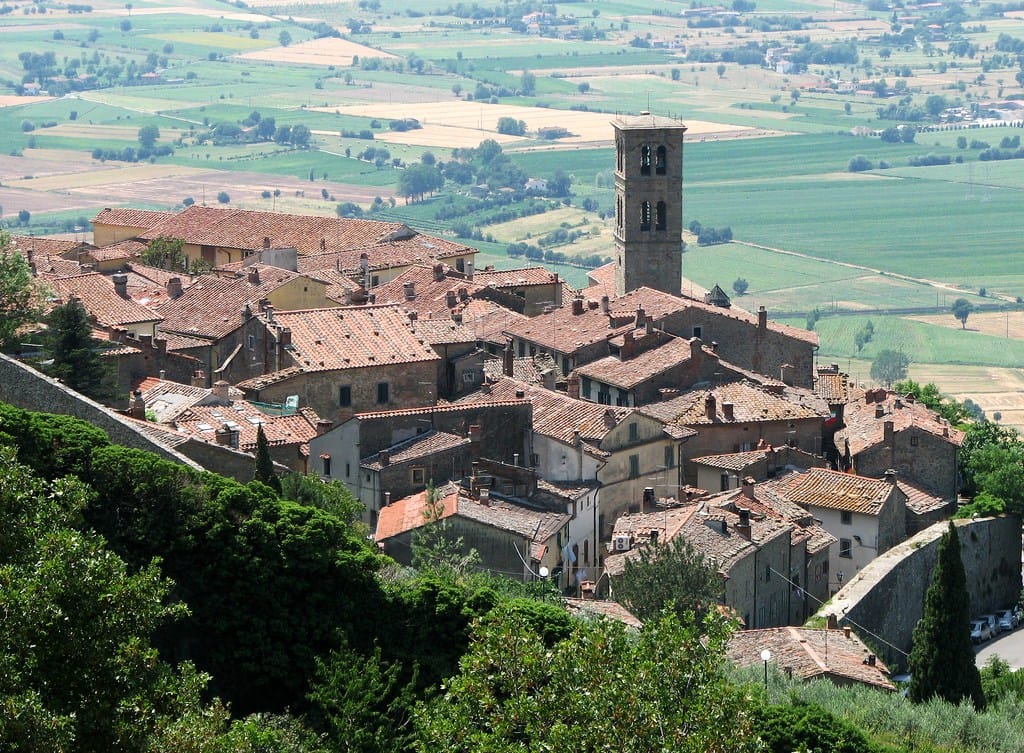
Cortona is one of the oldest continuously inhabited cities in Italy, perched at 600 metres on the slopes of Monte Sant’Egidio. From Piazza Garibaldi, the view extends across the Valdichiana valley to the shimmering waters of Lake Trasimeno across the Umbrian border.
Etruscan Roots
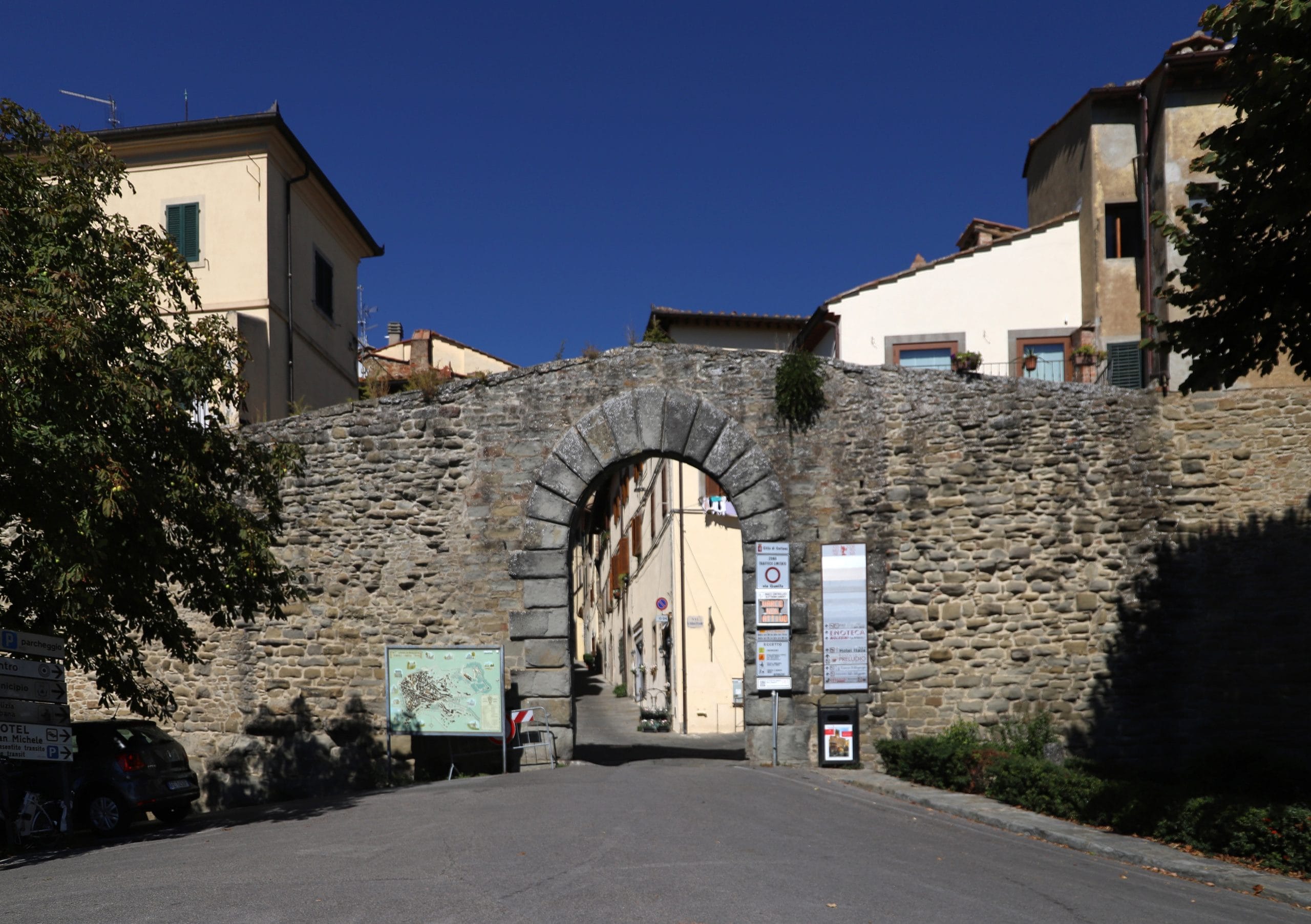
Ancient Greek writers called Cortona a “metropolis of the Tyrrhenians” — a founding city of the Etruscan League. The massive 4th-century BC stone walls that still encircle the city run for approximately 3km, and the monumental Etruscan tombs at Il Sodo — decorated with sculptural sphinxes devouring warriors — are unique in all of Italy.
Three Great Artists
Cortona gave the world three extraordinary artists: Luca Signorelli (c.1441–1523), whose Last Judgement at Orvieto influenced Michelangelo’s Sistine Chapel ceiling; Pietro da Cortona (1596–1669), the leading Roman Baroque painter; and Gino Severini (1883–1966), a founder of Futurism. Fra Angelico visited in 1436 and left his luminous Annunciation, now in the Diocesan Museum — one of the masterworks of the early Renaissance.
Under the Tuscan Sun
Frances Mayes bought Villa Bramasole near Cortona in 1990. Her 1996 memoir and the 2003 film starring Diane Lane made Cortona internationally famous — but the town has been drawing visitors for millennia, not decades.

