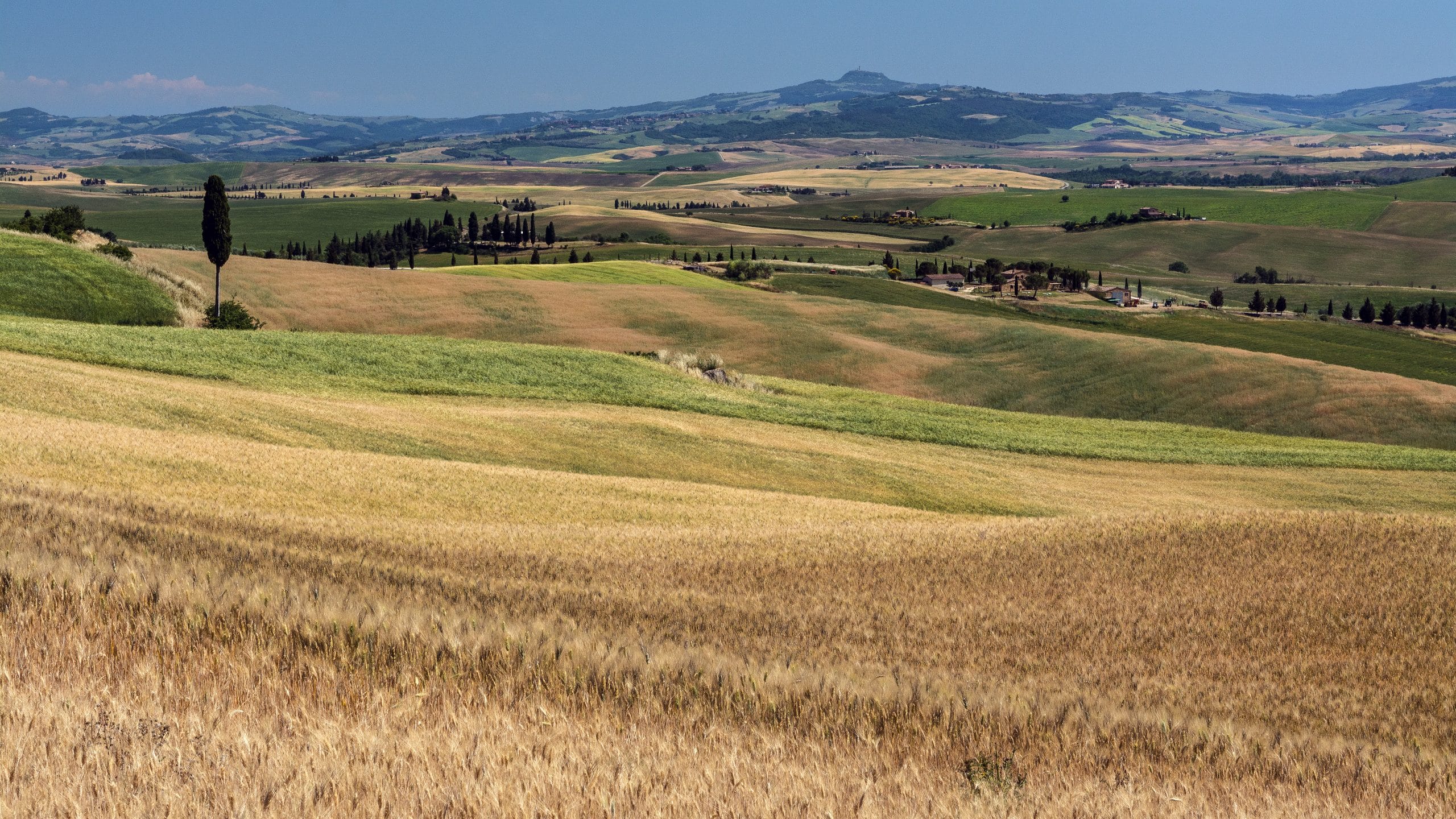
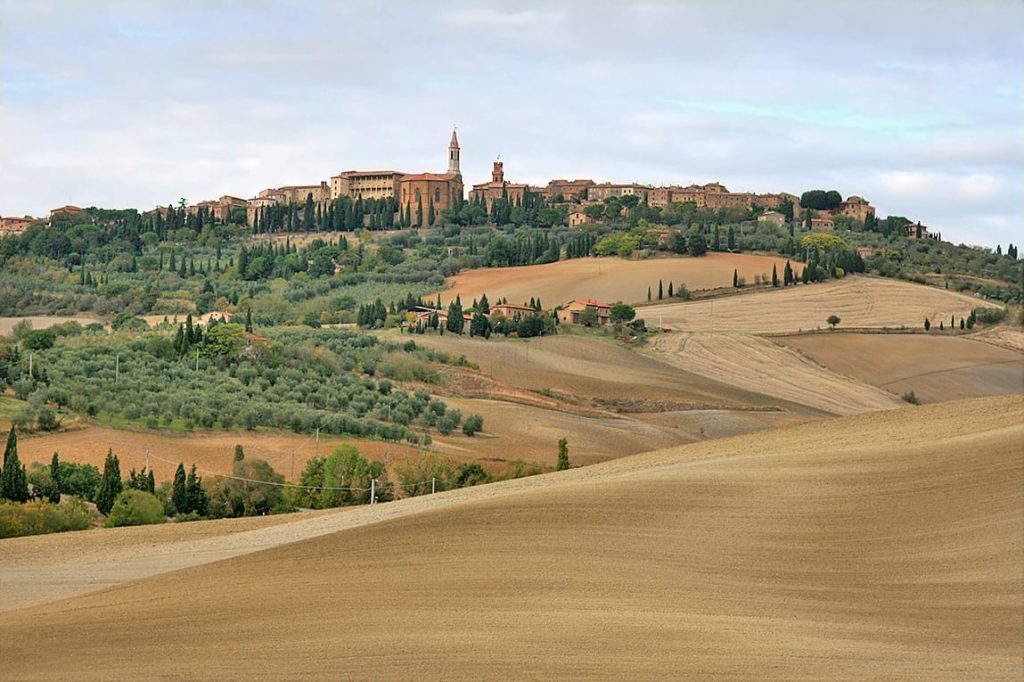
A Pope’s Renaissance dream of a perfect city was actually built here — and it survives essentially unchanged, more than 560 years later. Pienza sits on a hilltop overlooking the Val d’Orcia. It is a UNESCO World Heritage Site, the capital of Pecorino di Pienza cheese, and one of the most romantic places in Tuscany.
The Pope Who Built a City
In 1405, Enea Silvio Piccolomini was born in this village, then called Corsignano. He became one of the great Renaissance humanists before being elected Pope Pius II in 1458. Passing through his ruined birthplace in 1459, he commissioned architect Bernardo Rossellino — a pupil of Leon Battista Alberti — to rebuild it as his vision of the città ideale, the ideal Renaissance city.
Construction ran from 1459 to 1462. Budget: 10,000 florins. Spent: 50,000. Pius was so delighted he renamed the town after himself and waived the overspend. He died in 1464. The town has been essentially frozen at that moment ever since.

Piazza Pio II
The trapezoidal Piazza Pio II is one of the most perfectly composed urban spaces in the world. Its unusual shape is deliberate: the streets flanking the cathedral splay outward, framing views of the Val d’Orcia. Four buildings surround it: the Duomo, Palazzo Piccolomini (the Pope’s summer residence, where Zeffirelli filmed Romeo and Juliet), Palazzo Borgia (built by the future Pope Alexander VI), and the Palazzo Comunale.
Pecorino di Pienza
Pienza is inseparably associated with its sheep’s milk cheese, made from the raw milk of sheep grazing pastures flavoured by three wild herbs unique to the Val d’Orcia: artemisia, barberry, and minstrella. Walk along Corso Rossellino and you’ll smell the cheese before you see it.
The Side Streets
Beyond the piazza, narrow lanes with names like Via dell’Amore and Via del Bacio lead to belvedere terraces with extraordinary Val d’Orcia panoramas.