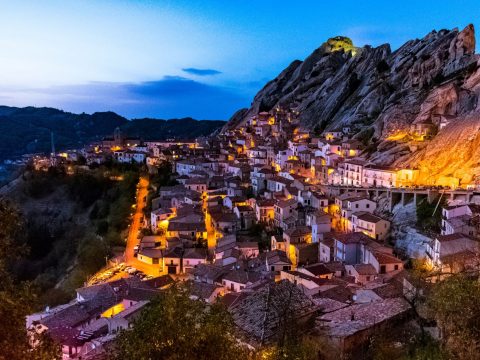
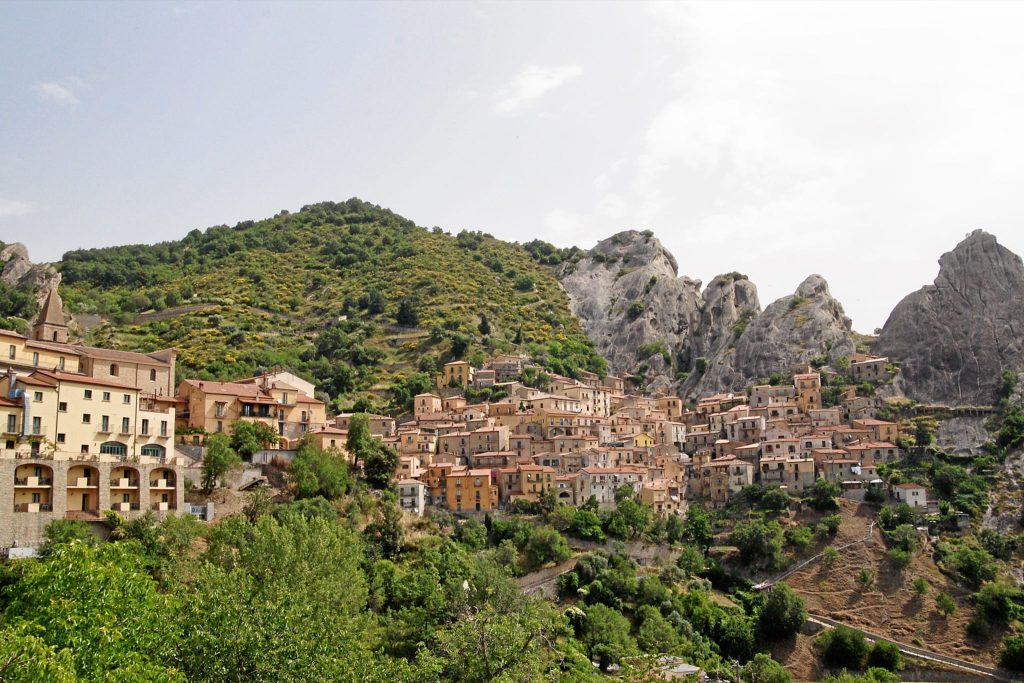
Castelmezzano is one of the most dramatically situated villages in all of Italy — a medieval settlement clinging to the sandstone pinnacles of the Piccole Dolomiti Lucane (Little Lucanian Dolomites) in the heart of Basilicata, at 985 metres above sea level. It is both one of I Borghi più belli d’Italia (the Most Beautiful Villages of Italy) and the southern terminus of the Volo dell’Angelo — a spectacular zip line that shoots visitors across a 400-metre-deep gorge to the neighbouring village of Pietrapertosa at 120 km/h.
The Dolomiti Lucane
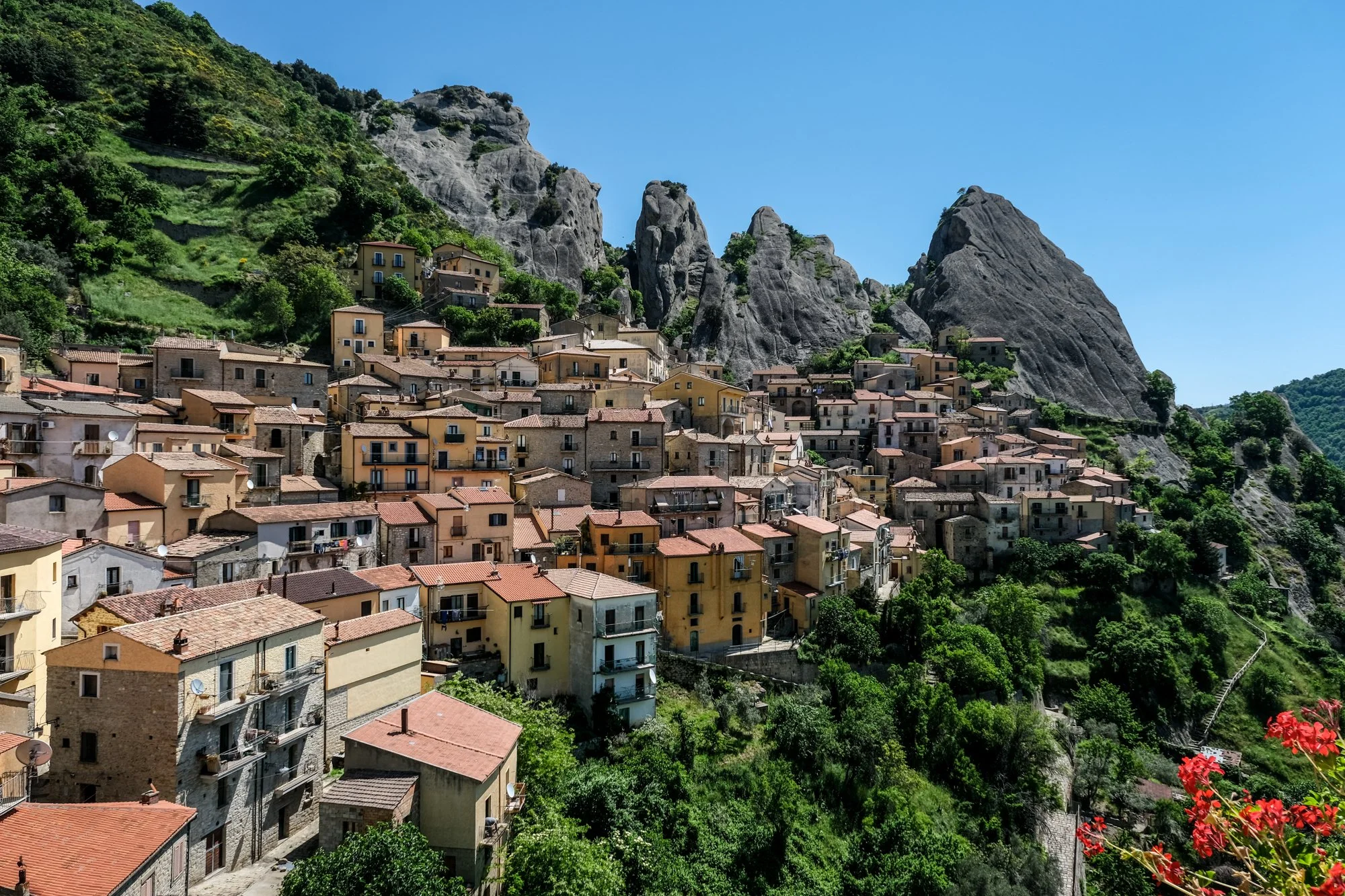
The sandstone formations emerged from the seabed during the middle Miocene (~15 million years ago) and have been sculpted by wind and rain into extraordinary shapes named over centuries: the Golden Eagle, the Anvil, the Great Mother, the Owl, and the Lion’s Mouth. The surrounding park’s forests consist of Turkey oak, fragrant lime trees, wild pear and apple trees, maples, alders and rare holly. Wolves, badgers, porcupines and wildcats live here; peregrine falcons and buzzards wheel above the pinnacles.

A Village Built Into Rock
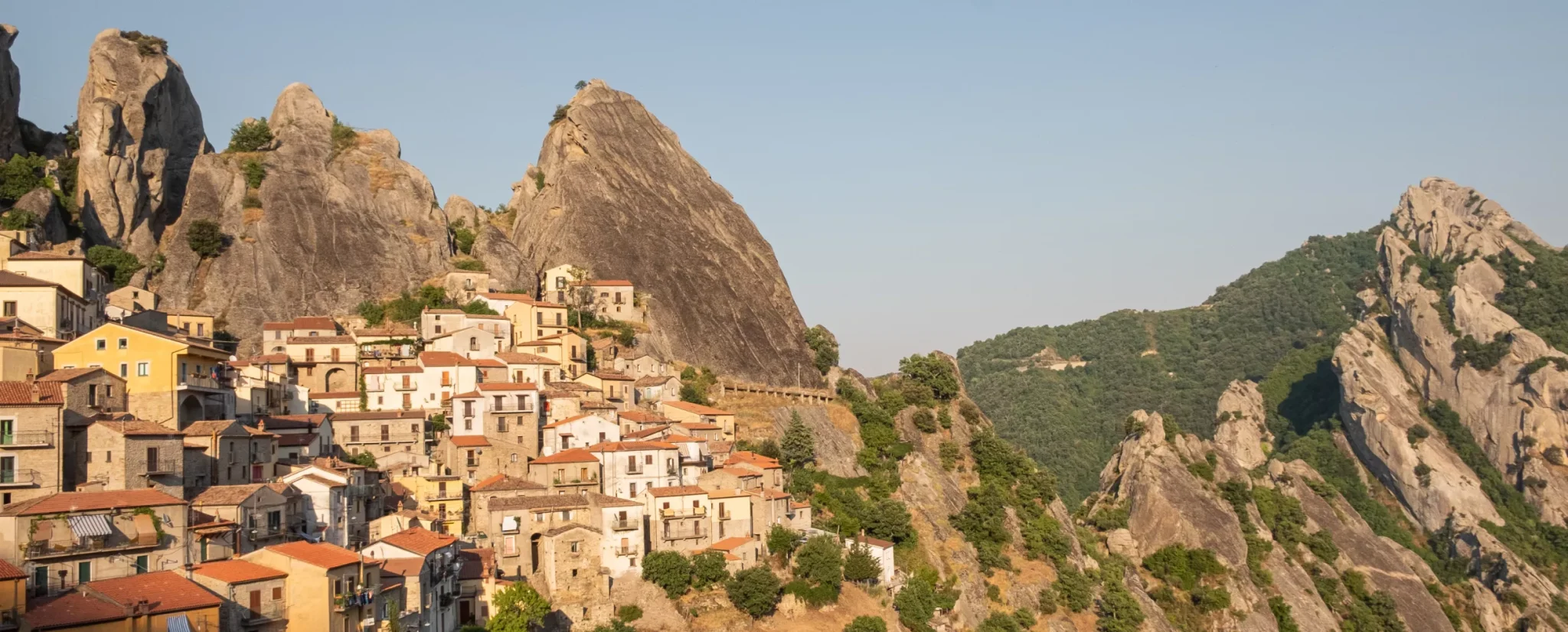
Entering Castelmezzano is theatrical: the historic centre is reached through a gallery carved through the rock at a cleft in the stone face — an entrance unlike almost any other village in Italy. The medieval fabric is a concentric cluster of sandstone houses with stone-slab roofs set into and against the living rock, connected by steep staircases, narrow alleys and shady passages that climb and twist between the pinnacles.
History
Greek settlers entered the valley of the Basento river in the 6th century BC and founded a settlement called Maudoro — meaning roughly “world of gold.” When the Saracen invasions swept southern Italy in the 10th century, the population fled upward into the rocks. The Normans later built a castle — Castrum Medianum (“Castle in the Middle”) — whose name gives the village its own. The remains survive: sections of curtain wall, a cistern for rainwater, and the extraordinary Gradinata Normanna — 54 steps carved directly into the rock face, once the access route to the medieval watchtower.