There’s a video I took during my last scouting trip to Basilicata that I can’t stop thinking about.
I was on the pasture, talking to Mariantonietta Vaccaro, the owner of Podolico Reale, a Slow Food Presidium producer of Caciocavallo Podolico, one of Basilicata’s most celebrated cheeses, when her dad got close to the river and started making these unusual, primordial sounds. It got my attention immediately. He’s calling the cow on the other side of the river, she said. He wants her to come back.
I learned that each of the roughly fifty Podolica cows not only has a name and a unique bell — so her dad can recognize them by sound — but that he has a specific call for each one of them.
Mariantonietta studied biotechnology and was offered a doctoral research position in chemistry. In 2016, she turned it down and joined her brother Antonio in formalizing the family’s century-old cattle-raising and cheesemaking tradition into a proper enterprise. I could definitely hear her scientific training in her way of talking about raw milk and cheese.
Podolica cows are like the Bentley of cows—gorgeous. With their wide horns and different shades of grey, they live entirely in the wild — no stables. They move between pastures according to the rhythm of transhumance, following the seasons.
You can see the wild grass in the milk: it’s bright yellow.
A Podolica cow produces about 5 liters of milk a day, compared to the 30 liters of a standard Jersey cow. And she will only give milk if her calf is nursing at the same time. The milking happens while the calf is feeding — the mother allows it, because her baby is there.
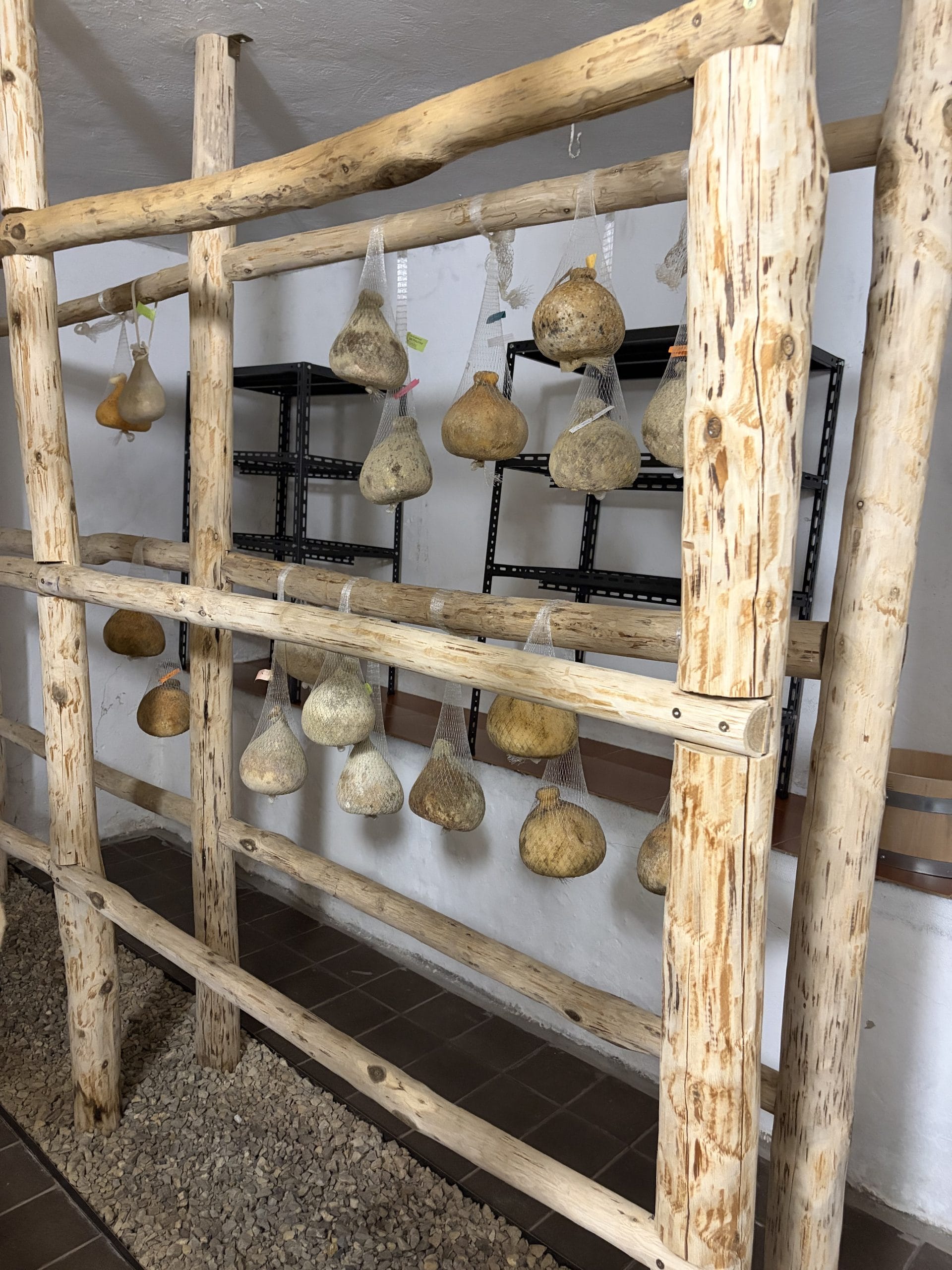
I had the pleasure of watching Antonio — Mariantonietta’s brother and the cheesemaker — work. He crafted their famous caciocavallo, and manteca: a rich, golden butter made by separating the fat from the whey, then wrapped inside a layer of stretched-curd cheese to preserve it for up to a year, without refrigeration. It’s one of those solutions so elegant it makes you wonder why the rest of the world forgot it.
Talking to Mariantonietta and witnessing their work, what strikes me most is the radical choice of not following the rules of modern farming. Only raw milk. No artificial enzymes. Wooden tools instead of metal. Everything is done by hand.
I often question if following a tradition is simply nostalgia, but in their case it is really about putting the quality of the product first.
By transforming the milk immediately, without long transport, they don’t need to reduce the bacterial load. Her father once introduced a milking cart to milk two cows at once — but when they analyzed the milk, the bacterial count was ten times higher than with hand milking. Every choice they make exists to keep their milk healthy, raw, and never pasteurized.
If you ever find yourself in Basilicata, go visit them. You can find Podolico Reale in Brindisi di Montagna, in the mountains near Potenza.
And I’m curious… Between an academic career and crafting raw cheese in the mountains, which path would you have chosen?
Originally published on Giuditta’s Substack →
Get a new story like this every two weeks.
SubscribeYou’re subscribed!
A welcome email should arrive within the next minute or so. If you don’t receive the email, please check your spam folder.
Can I ask you to do me a favor? Please click the “confirm” button in the email. That way, I’ll know it reached you.
Feel free to reach out to me with any questions.
Thank you!
— Giuditta ()
PS: Add my email () to your contacts and you’re guaranteed to receive my newsletter.
Unsubscribe anytime; I’ll never spam you or share your address.