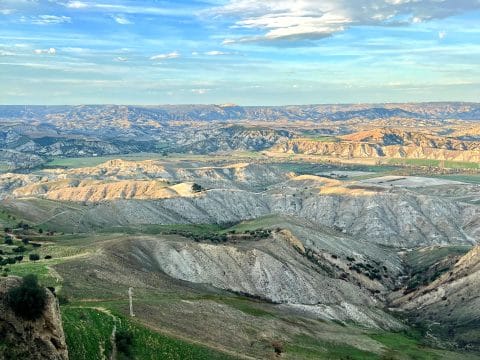
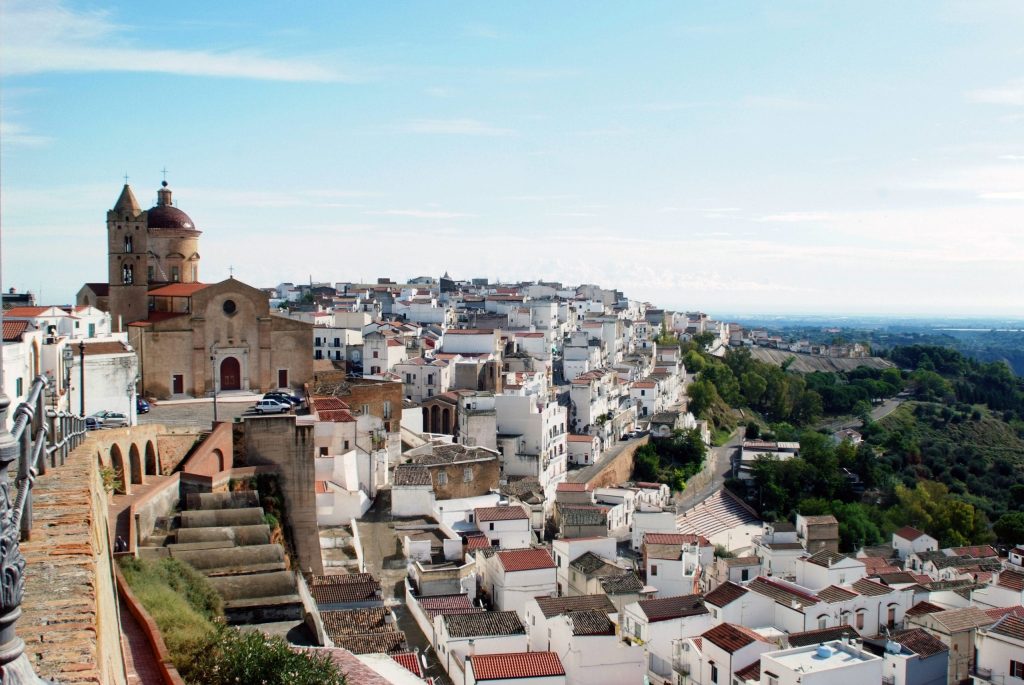
About 50 km from Matera, Pisticci is set within a spectacular landscape of calanchi — the badlands — that overlooks the Ionian Sea.

The Lammie — Architecture of Survival
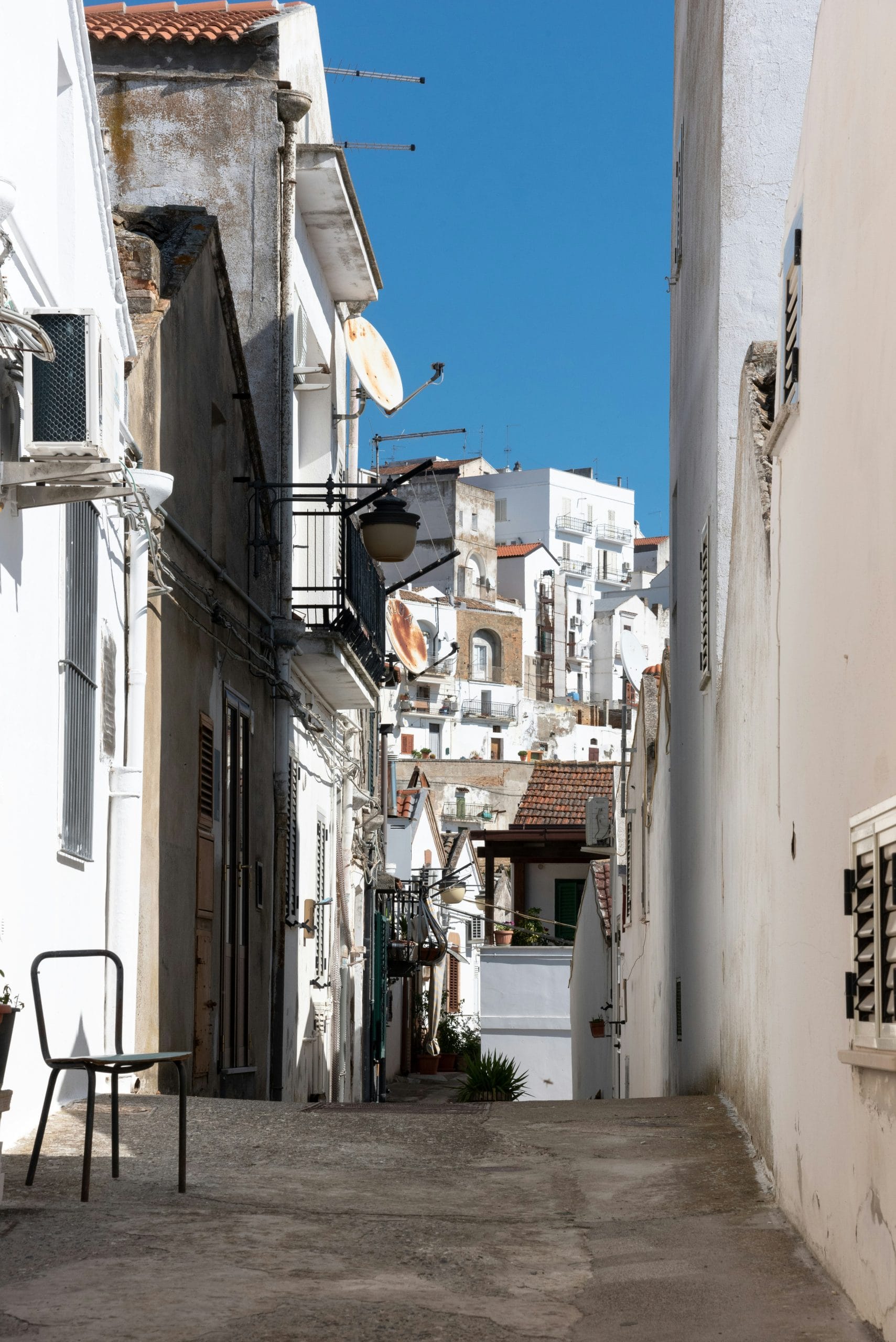
The district of Dirupo took its name from a violent landslide in 1688, on the ruins of which it was rebuilt. It is characterized by the lammie: typical white houses lined with simple and spontaneous architecture. These are the same lammie that Ralph Giannone faithfully restored at Torre Fiore.
A Town Born 3,000 Years Ago
Pisticci was founded by the Enotri during the Iron Age in the 9th century BC. It was a centre in close contact with the Greek culture of nearby Metaponto. Its name derives either from the Latin Pesticius, meaning pasture land, or from the Greek pistoikos, meaning “loyal place.”
The First Great Artist — A Story of Migration
One of the most beautiful details about Pisticci is that its most famous ancient figure was himself an immigrant. During the 5th century BC, the town excelled in pottery production in the Attic style, with its greatest exponent being the so-called Pittore di Pisticci — the Pisticci Painter — probably an artist who had emigrated from Greece. He is considered the progenitor of the Lucanian vase-painting tradition and the first master of red-figure ceramics in Italy.
A Son of Pisticci Who Built Rome
Pisticci was the birthplace of Ernesto Bruno Lapadula, the architect of the Palace of Italian Civilisation in Rome — known as the Square Colosseum.
Emigration — The Town That Scattered and Returned
Following Italian unification in 1861, conditions in Pisticci worsened dramatically. The feudal land system, known as the latifondi, combined with deforestation, the spread of malaria, and the agrarian crisis of the 1880s, fueled wave after wave of emigration. Thousands of Pisticcesi departed between 1880 and 1914, primarily to the Americas.
Giovanni Giannone, born in Pisticci in 1930, left for Toronto on 28 May 1958. Adele Newton’s parents left Pisticci in the early 1950s for Toronto; sixty years later, Adele co-created our Basilicata tour to bring others back.