How I learned to love fave e cicoria
My mother's dandelion greens
Jump to Adele’s recipe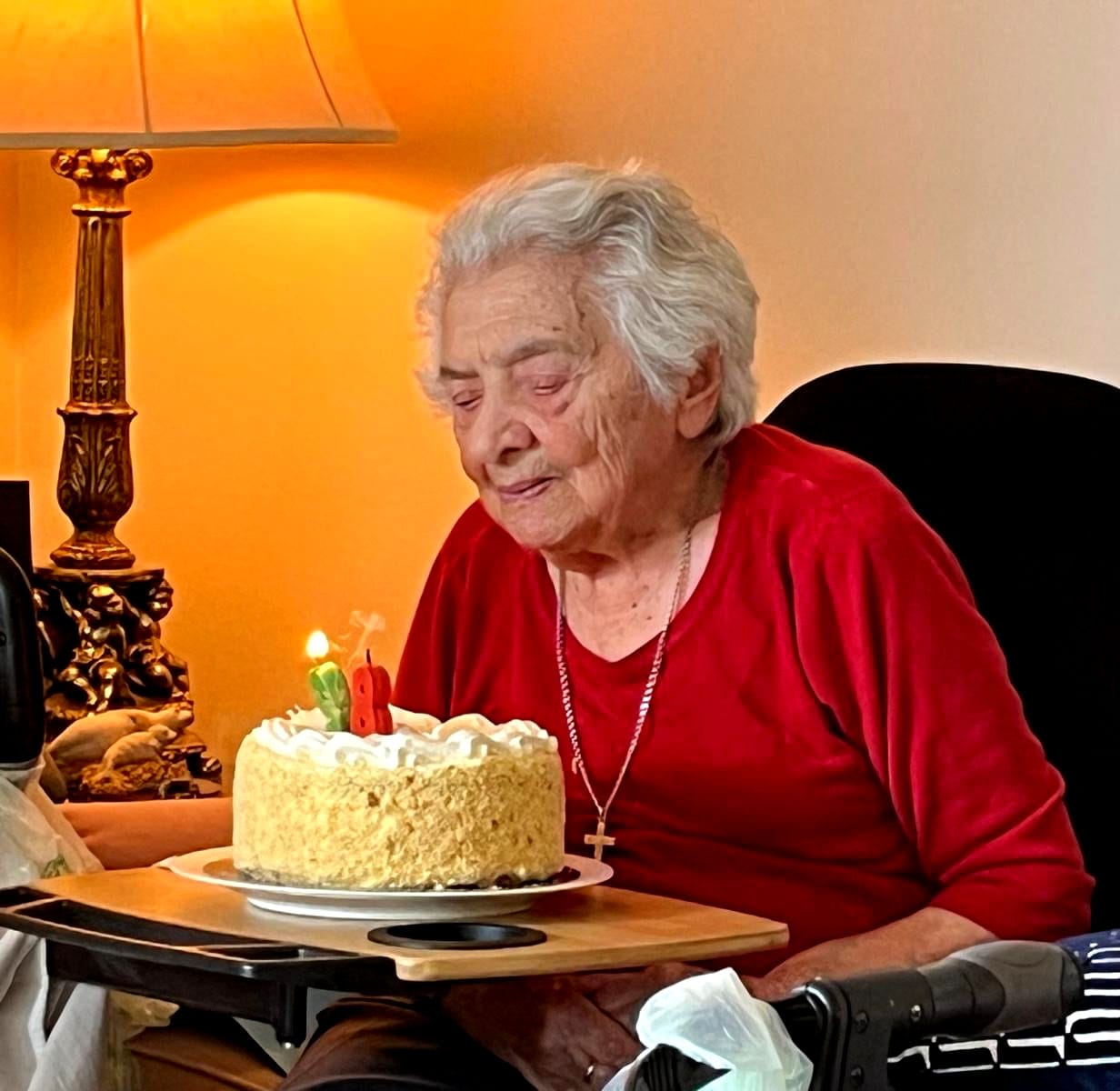
The first thing my mother ever cooked was dandelion greens. She was five years old and staying with her grandmother at her farm in rural Italy. While Nonna was out working in the fields, little Anna decided she would make lunch. She picked the dandelion greens from the garden, as she had seen Nonna do, and cooked them up with garlic and olive oil in the heavy iron pot over the fire — just like Nonna. As Mom told the story, her grandmother was amazed and bragged to her friends about her clever little granddaughter.
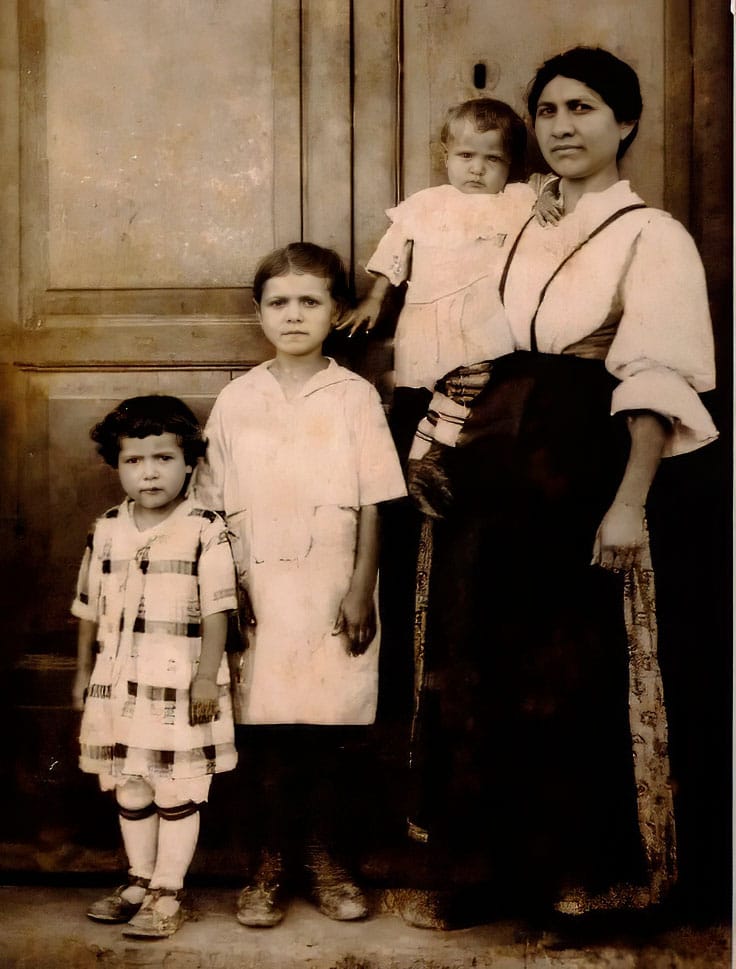
Pre-WWII southern Italy was not the same as 1960s Toronto. Those same dandelion greens were not only bitter and reviled by me and my siblings — they also came to symbolize all that made us different from our friends, who wondered why our family picked and ate weeds.
Growing up in Toronto’s Little Italy meant that almost all of our neighbourhood was made up of immigrant families, most from the poorest regions of southern Italy. We all went home from church to the sacred Sunday lunch of pasta in tomato sauce (not gravy, as they call it in New York), sausages and meatballs. On special occasions, like Easter, Christmas or namesake days, there would be lasagne followed by roast lamb or goat or rabbit.
On weekdays, we had “minestra” — the dreaded dandelion greens, rapini (almost as bad!) or stuffed eggplant or artichokes or veal cutlets and, on Friday night, fried smelt. Some of our friends’ families had pasta every weeknight, but in our house pasta was reserved for Thursdays and Sundays. Breakfast cereal and boiled hot dogs, served on a folded slice of white bread, were the only nods to what we thought of as Canadian food.
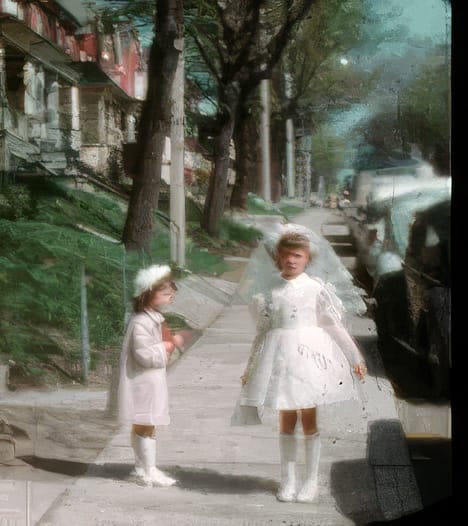
And then we moved to the suburbs. Instead of there being three girls named Maria in my class, I was now in a school with kids whose names I’d only heard on TV. Maureen. Tim. Paul. Cathy. Adelina was impossibly Italian — so I rechristened myself Adele. I was still the only girl with that name in the school, but at least it didn’t scream “WOP!”
My new classmates brought peanut butter and jam sandwiches for lunch. I begged my mother to switch from fried pepper or meatball sandwiches on Italian bread to bologna and the coveted Wonder Bread. It was unthinkable to invite my new friend, Cathy, who, with her blond hair and freckles, was as Irish as I was Italian, for a meal of spaghetti or minestra for dinner instead of the roast beef or the unbelievably exotic liver and onions I knew she ate at home.
But real shame burned in my 11-year-old heart when my parents dragged us along to pick the dandelions. As a construction worker, my father had scoped out the best vacant lots and industrial lands for harvesting greens of all kinds — at no charge! Not just dandelions, but mustard greens and what I now know are cardoons.
For my parents, these were family Sunday outings with the incredible added benefit of free food that would be cooked and frozen to eat throughout the year. For my younger brother and sisters, piling into the big Ford station wagon to meet up with our cousins for an afternoon of playing together in new and unexplored spots was nothing but fun. But for me, picking dandelions was a carefully-held secret I could never share with my pre-teen friends. When Cathy told me about her Sunday afternoon visit to Centre Island with her parents and two brothers, I’d lie with enthusiasm: “We went on a picnic yesterday!”
Get Bitter Honey recipes and stories in your inbox.
You’re subscribed!
A welcome email should arrive within the next minute or so. If you don’t receive the email, please check your spam folder.
Can I ask you to do me a favor? Please click the “confirm” button in the email. That way, I’ll know it reached you.
Feel free to reach out to me with any questions.
Thank you!
— Giuditta ()
PS: Add my email () to your contacts and you’re guaranteed to receive my newsletter.
Unsubscribe anytime; I’ll never spam you or share your address.
Bitter Honey will always be free for everyone. —Giuditta
As those vacant lots became subdivisions and industrial parks and we became teenagers, those outings faded to a blessedly distant memory. As a pre-teen, I carefully studied the one and only cookbook in the house — from Five Roses Flour — and finally chose a recipe for the decidedly non-Italian pineapple upside-down cake as the first thing I would cook on my own. I discovered the Galloping Gourmet and watched faithfully to learn about cream sauces, clarified butter and even hors d’oeuvres! My love of food, cooking and eating had begun.
Suburban Toronto evolved and so did our family. Mom started roasting turkey for Christmas, and family BBQs featuring hot dogs and hamburgers became a staple — even though my father could never stomach the sight of mustard, and considered ketchup to be nothing but a bastardization of good tomato sauce.
When it came time to move away from home to attend university, I was excited about living in residence and the prospect of sharing meals with my dorm mates in the cafeteria. This would almost be like having every meal in a restaurant! It didn’t take long for the novelty to wear off and for the soon-dreaded mystery meat to make its way into the regular dinner rotation. I realized how much I missed my mother’s cooking, and coming home from Sunday Mass to the welcoming aroma of meatballs slowly simmering in tomato sauce.
When I moved into a shared house with girlfriends, I realized how much about healthy cooking on a budget I had learned from Mom. Saturday morning visits to the busy Kitchener Farmers Market reminded me of regular trips to the Kensington Market in Toronto as a child and were a welcome change from the grind of classes, assignments and studying for midterms and exams. I looked forward to putting aside my calculus and statistics textbooks to immerse myself in dinner planning, prepping and cooking. And in sharing meals with my housemates and friends.
Once in charge of my very own kitchen and able to cook exactly what I wanted, I gravitated to my mother’s style of cooking, and some of those culture clashes I experienced in grade 7 came back in force. As newlyweds, we were excited to host my husband’s parents for the first time. I wanted everything to be picture-perfect — especially dinner. My mother-in-law had once told me that she loved veal, so I made braciole (veal cutlets, stuffed with prosciutto, provolone and parsley) served in homemade tomato sauce with spaghetti for that first dinner. “What an interesting meal to make for company” was her response.
Decades later, my siblings and I all love rapini, though it took our children reaching their mid-thirties before they came to appreciate it. Extended family dinners are more complicated than traditional now, with a group that includes vegans, a daughter-in-law with celiac disease and another who is lactose intolerant. It’s a challenge, but we continue the tradition of including lasagne as part of our holiday get-togethers.
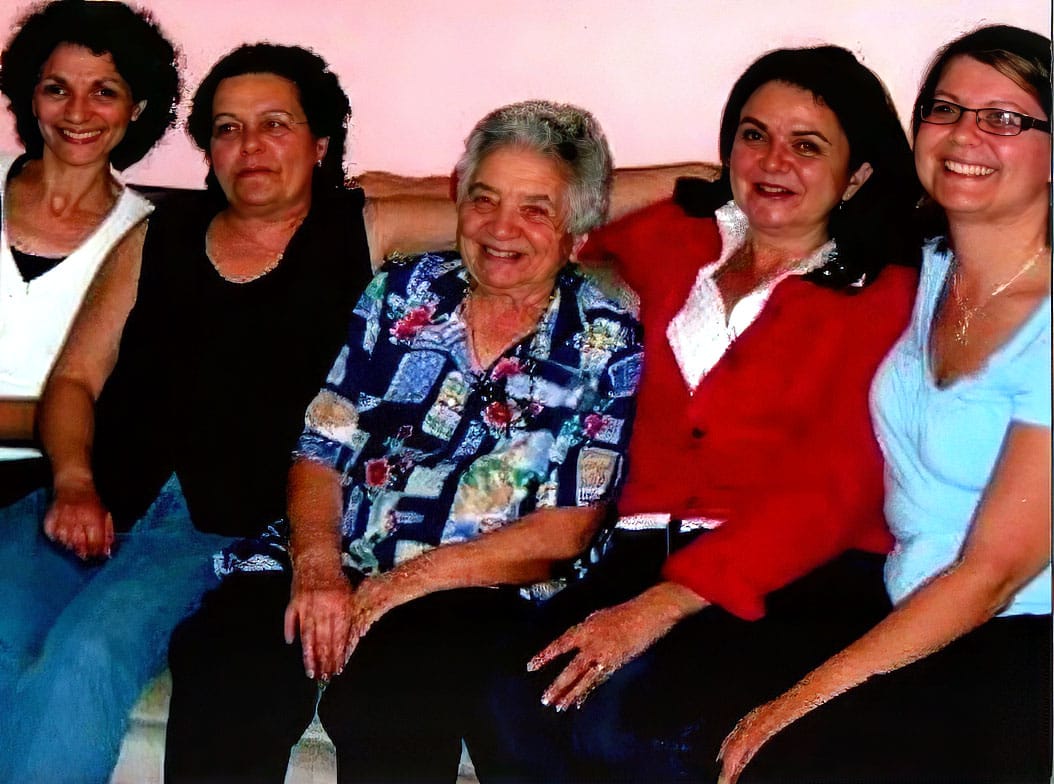
And dandelion greens? My siblings still hate them, but I learned to love them. Every so often Mom would call me to say, “I cooked dandelion greens and fava beans. When can you come for dinner?” A special treat, just for me. The ultimate comfort food — no picking required!
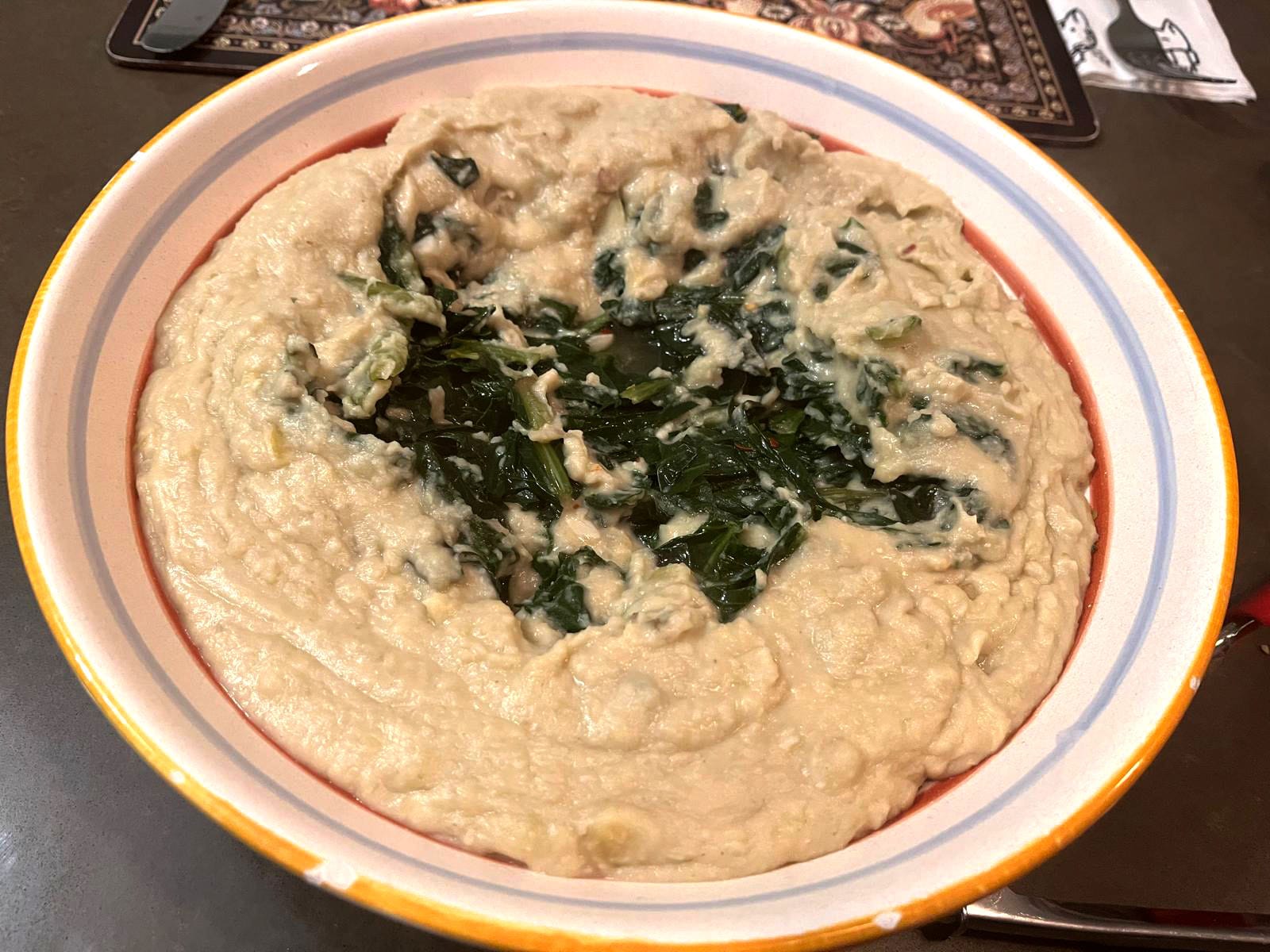
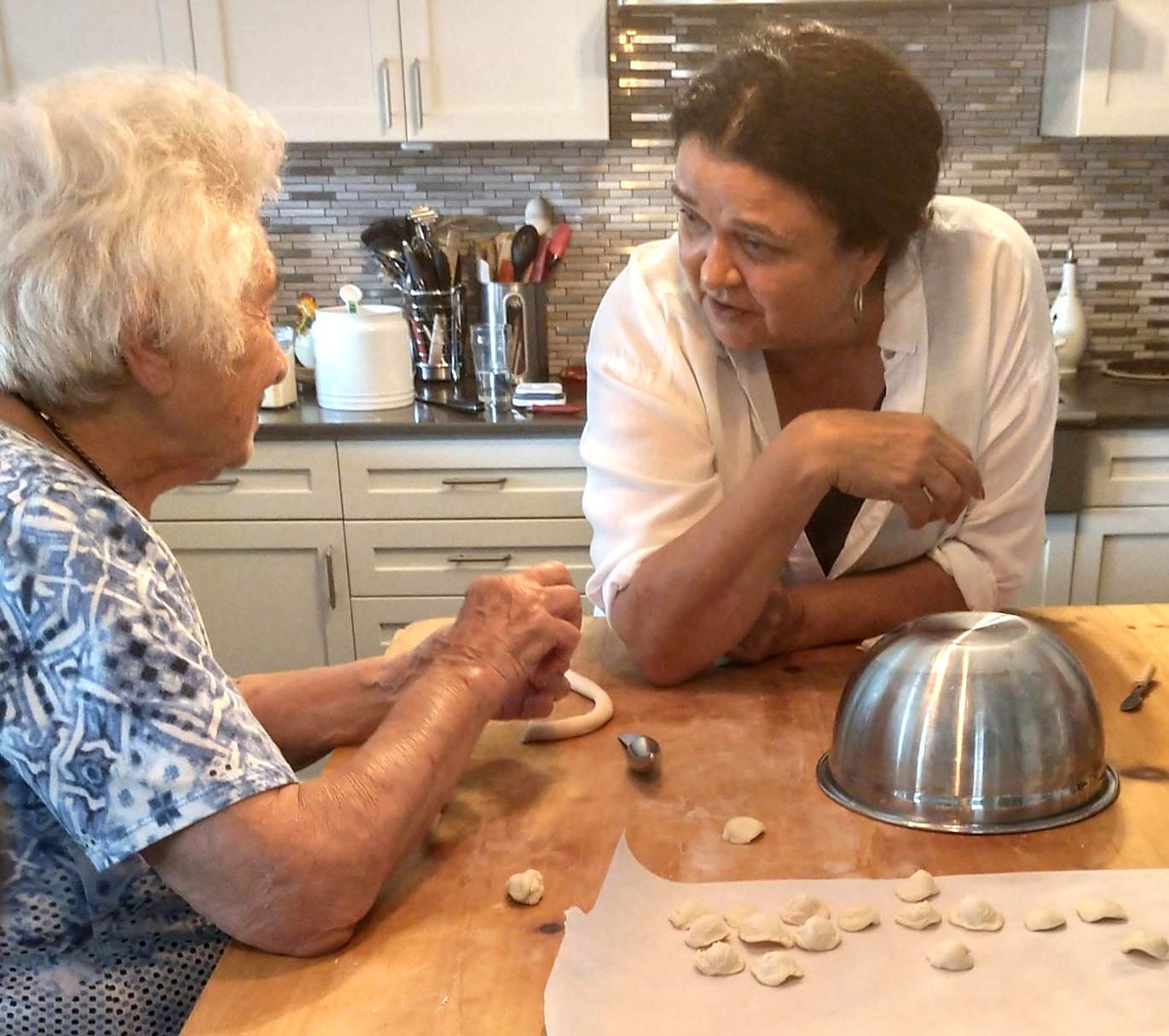
Mom died in March of 2025. Cooking was what we talked about at the end, when her dementia made any other kind of conversation challenging. During our last lunch together, she explained how to make taralli. I’m still trying to find the courage to write about it.
This post is an adaptation of a post I wrote for my Substack, Dandelion Greens. Read the original here.
I wrote more about my amazing mother here.
Recipe
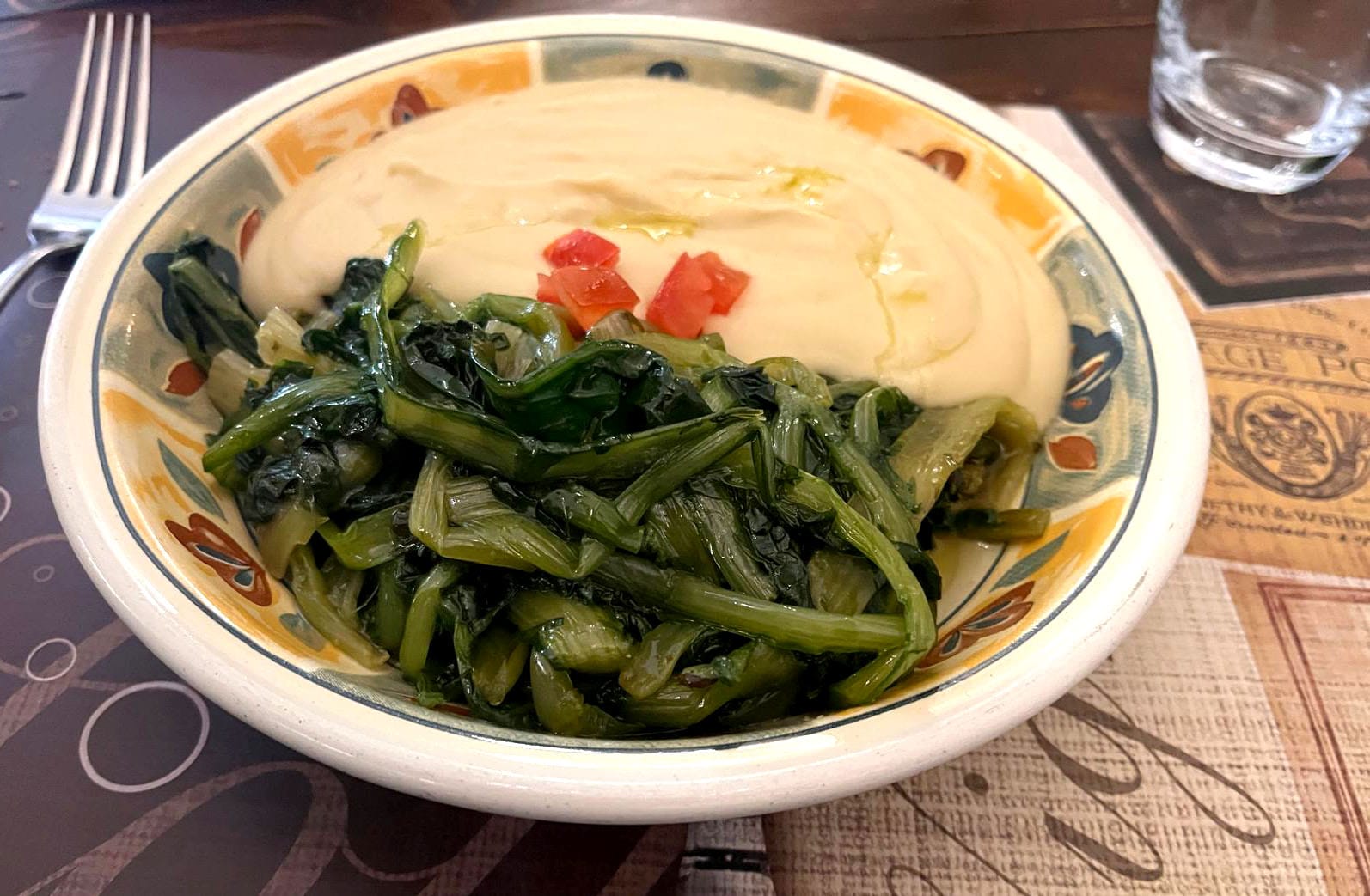
Vegetarian, vegan, and gluten-free. Remember to soak the dry fava beans the evening before you plan to make it.
- For the fava beans
- 1 cup dry fava beans (available in the international or Portuguese food aisle of large grocery stores)
- 1 small onion, diced (about 1 cup)
- 2 cloves garlic, chopped
- Chicken or vegetable broth, or water, to cover
- ½ teaspoon sea salt
- ½ teaspoon freshly ground pepper
- 3 tablespoons olive oil, divided
- For the dandelion greens
- 1 bunch dandelion greens (8–10 oz), stems discarded, chopped
- 2 large cloves garlic, roughly chopped (about 1 tablespoon)
- 1 tablespoon olive oil
- ½ teaspoon sea salt
- ¼–½ teaspoon crushed red pepper flakes, to taste
- Put the dried fava beans in a large bowl and cover with water by at least 3 inches. Soak overnight.
- Drain the beans. Skin each one by scoring the broad side with your fingernail and slipping off the skin.
- Sauté the diced onion in 2 tablespoons of olive oil until translucent.
- Add the chopped garlic and sauté for one minute — don’t let it brown.
- Add the fava beans and enough broth or water to cover.
- Bring to a boil, then simmer until the beans are soft, about 30 minutes. Check the liquid from time to time and add water or broth if the beans stick to the pan.
- Drain any excess liquid, add the salt and pepper, and use a potato masher to purée.
- Taste and adjust the salt and pepper. Drizzle with 1 tablespoon of olive oil and keep warm for serving.
- While the beans simmer, braise the greens: rinse the chopped dandelion greens in cold water and drain in a colander.
- Sauté the chopped garlic in 1 tablespoon of olive oil in a large saucepan or cast-iron pan over medium heat — don’t let it brown.
- Add the dandelion greens along with the water still clinging to them.
- Add the salt and ¾ cup of water.
- Bring to a boil, stirring often.
- Turn the heat to medium, cover, and braise for 10–15 minutes, until the greens are cooked through but not mushy.
- Stir in the red pepper flakes and adjust the salt to taste.
Serve the dandelion greens over the fava beans. Great with simple roasted or BBQ’d chicken, steak, or pork — or on its own as a light lunch or dinner.
Others remember
What people said after reading Adele’s story
My maternal Nonna, Assunta Villani Latessa, came to Windsor from Guardialfiera. She was a regular in our household of six kids. We saw her every Sunday after Mass, but every Wednesday she made her way to our house for pasta making (oh visuals of wells of flour and egg), followed by dinner that evening of veal, pasta, and dandelion salad.
The salad collection started with a paring knife from the kitchen, a shopping bag, and one or two of us taking the walk with her, in her kitchen apron, out of our new subdivision towards the "hills" of a local bush. Well worth the temporary humiliation and embarrassment we felt as kids when we came across our mangia-cake friends from the neighborhood.
Nonna's family's regional cooking was very unlike my father's side—Troia Iannette—who come from San Vittore del Lazio. So much red sauce :-) Our meals with both sides present were a mix of mandatory and optional food offerings, all of which might be negotiated beforehand. Or just miraculously appeared. The one item that did not require negotiation was the dandelion salad.
My sweet heavenly mother also cooked dandelion greens. I remember her as a child she used to climb little hills full of rapini and dandelions and she used to fill a plastic bag bring it back home, clean and process them in individual portions so she could eat all winter. I miss her very very much. ✝️♥️
The Bitter Honey Project
The recipes the women and men of the Italian diaspora carried across the water, and the stories behind them.
Recent posts
 My mother’s torrone di mandorle
The aroma of Christmas
My mother’s torrone di mandorle
The aroma of Christmas
 My grandmother’s seadas
How a Sardinian dessert helped me find my way
My grandmother’s seadas
How a Sardinian dessert helped me find my way
Get Bitter Honey recipes and stories in your inbox.
You’re subscribed!
A welcome email should arrive within the next minute or so. If you don’t receive the email, please check your spam folder.
Can I ask you to do me a favor? Please click the “confirm” button in the email. That way, I’ll know it reached you.
Feel free to reach out to me with any questions.
Thank you!
— Giuditta ()
PS: Add my email () to your contacts and you’re guaranteed to receive my newsletter.
Unsubscribe anytime; I’ll never spam you or share your address.
Bitter Honey will always be free for everyone. —Giuditta
Do you have a recipe? .My dream is to connect our hometowns in Italy with all the places we ended up—through the recipes of our mothers and grandmothers.— Giuditta
Share this post
Watch the Instagram Reel
View this reel on Instagram