3:00 PM
Here are some of the videos:Video by Giuditta Pileri
This is Mariantonietta’s father, who takes care of the cows. They have 70 in total, each with a name and a bell that makes a slightly different sound so he recognizes them. He call them by making a different sound for each one.
Isn’t this so beautiful?
1:23 PM
Had a lunch in an unusual restaurant right outside Potenza.
3:53 PM
4:40 PM
Show transcript
Now, let's look from here. Look at the bunny! Look at that little one—oh, yes!
Also, ankelig, yeah. Look! Let's go see!
Auto-generated transcript — machine-generated translation from Italian.
Ora guardiamo da qui. Guarda il coniglio! Guarda quello piccolino… Eh, sì! Anche lì, sì. Guarda!
Andiamo a vedere!
Auto-generated transcript.
4:50 PM
5:00 PM
5:03 PM
5:04 PM
Show transcript
Here she is—now she's coming to market. Not to mention the manticas, which are so hard to find, really. Oh, really long! I didn't expect that.
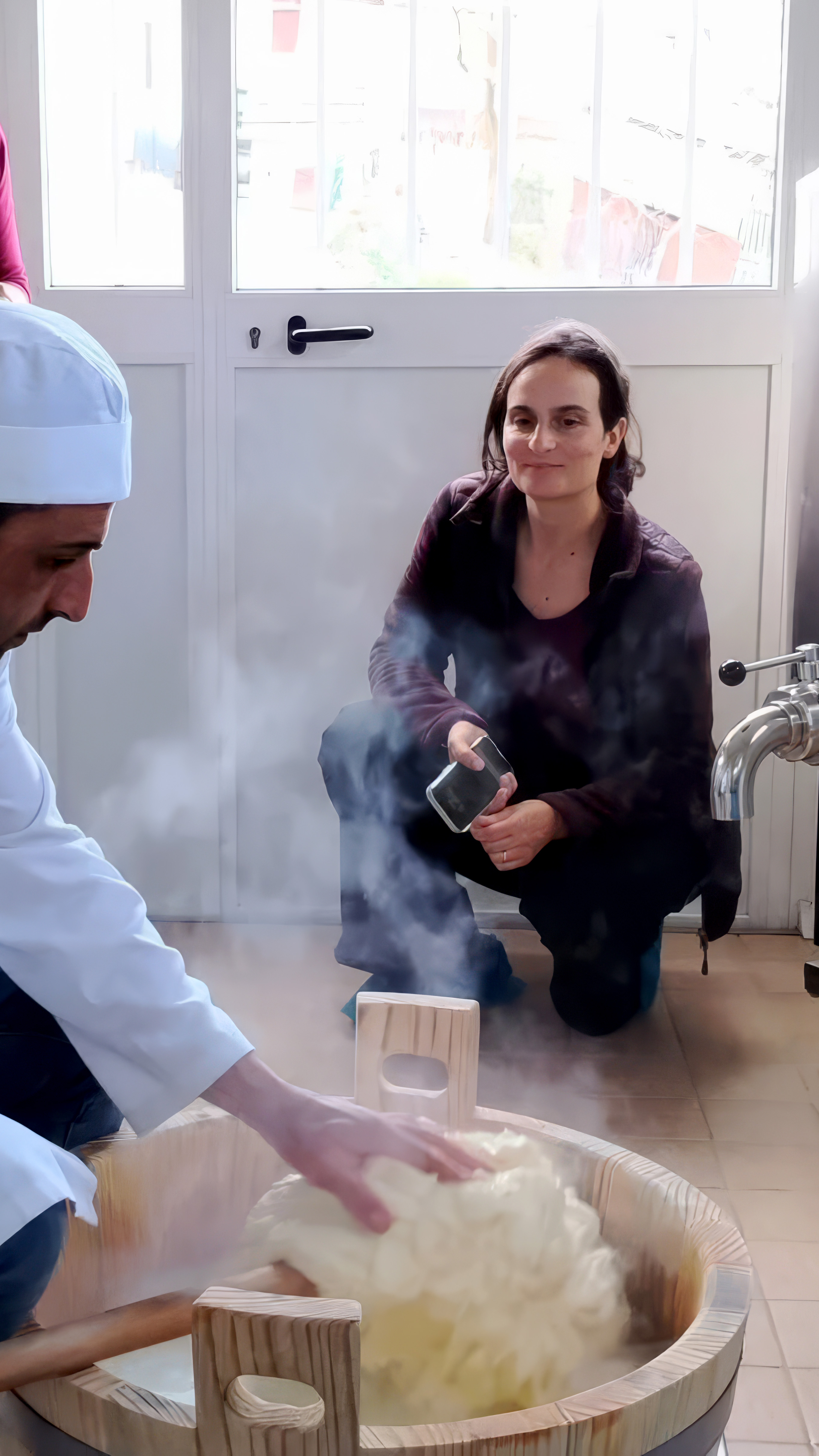
Walls—so, side systems that must be disinfected right away, that need to be formed. It doesn't end. All these long transports, and then we don't need to reduce the bacterial load. The stretching is done by hand.
This is also a new talk you've created. There was a time when Parla came to introduce the cart milker, so we managed to milk two cows at the same time.
Mm-hmm. But it also had some—
Auto-generated transcript — machine-generated translation from Italian.
Eccola, adesso viene in mercato. Per non parlare delle mantiche, che sono così difficili da ritrovare. Oh, lunghissimo proprio! Non me lo aspettavo.
Pareti, quindi sistemi di lati che devono essere subito disinfettati, che vanno formati… non finisce mai, tutti questi lunghi trasporti. E poi non abbiamo la necessità di abbattere la carica batterica, la lungitura viene fatta a mano.
Anche questo è un nuovo talk che avete creato. È stato un periodo in cui è venuto fuori il discorso della mungitrice a carrello, quindi riuscivamo a mungere due mucche contemporaneamente.
Però aveva anche degli…
Auto-generated transcript.
5:07 PM
Show transcript
It seems that a drop of butter comes out when I do it—mm. So if you see the butter coming out, it means that, yeah, the person doing it is not very good.
I understand. And here too, you can do the closure—precise, precise. It's a problem, a little signal of something, little, little. Okay, I want to keep that.
We have bought—we have lost the…
Auto-generated transcript — machine-generated translation from Italian.
Pare che venga una goccia di burro quando lo faccio io. Quindi, se si vede uscire il burro, vuol dire che la persona che lo sta facendo non è proprio bravissima.
Ho capito. E anche qui si può fare la chiusura precisa, precisa. È un problema piccolo, un segnale di qualcosa, ma proprio poco.
Okay, voglio tenere quello. Abbiamo comprato… abbiamo perso il—
Auto-generated transcript.
5:08 PM
Show transcript
At the beginning, after a first introduction, obviously, about—mm, well—why is it called caciocavallo? Where does the name come from? The name probably comes from its shape. Many people say that caciocavallo is called that because it's "cheese on horseback." Yes, because you hang it—thanks to the little head, you can tie it and then hang it during aging. They're hung like this, but also, when they were made in pastures far from the farmhouse, so during the transhumance period, when they were far away, then when they brought them back, they took them back to their families, to their farmhouses. They had to transport all these products, and probably they did it right on horseback, so on the horses' backs.
Why the name? But I found a document from the nineteenth century where they were actually asking about the name, and they said, actually, manteca and scamorza also have this same shape and are aged in the same way, so why does caciocavallo have this name and the others have different names? They guessed that in the past it wasn't like this—the shape of the head came to us simplified, because at the beginning it was fun. They actually enjoyed making little horse head shapes. So caciocavallo would come from that.
In my opinion, these theories aren't very unlikely, because I also remember my grandfather, who often had fun with the caciocavallo dough, making these shapes, which are also the same ones reproduced on the spoons they made out of wood. So it looks like a horse's head or little roosters. There you go, see, yes.
And this is the king of aged stretched curd cheese. Mozzarella and stretched curd is the queen of fresh stretched curd, while caciocavallo is the king of aged stretched curd.
Auto-generated transcript — machine-generated translation from Italian.
All'inizio, dopo una prima introduzione ovviamente sul caciocavallo—come mai si chiama così, la derivazione del nome probabilmente viene dalla forma.
Molti dicono che si chiama caciocavallo perché il cacio viene messo “a cavallo”, sì, perché grazie alla testina si può legare e quindi appendere durante la stagionatura. Si appendono così, ma anche quando venivano prodotti in pascoli lontani rispetto alla masseria, quindi nel periodo della transumanza, quando stavano lontani. Poi, quando riportavano tutto alle loro famiglie, nelle masserie, dovevano trasportare questo prodotto e probabilmente lo facevano proprio a cavallo, quindi sulla groppa dei cavalli.
Però ho trovato un documento dell’Ottocento dove si chiedevano proprio la questione del nome. Dicevano: “In effetti anche la manteca, anche la scamorza, hanno questa stessa forma e vengono stagionate allo stesso modo. Perché questo si chiama caciocavallo e gli altri invece hanno altri nomi?” Ipotizzavano che in passato, in realtà, la forma non fosse così: la testa ci è arrivata semplificata, perché all’inizio si divertivano proprio a fare delle formine di teste di cavallo. Quindi caciocavallo deriverebbe da questo.
Secondo me non è molto inverosimile questa ipotesi, perché ricordo anche mio nonno che spesso si divertiva con la pasta del caciocavallo a fare queste forme, che poi sono anche le stesse che vengono riprodotte sui cucchiai che facevano di legno. Quindi, sembrano teste di cavallo o galletti, così. Ecco, vedi, sì.
E questo è il re della pasta filata stagionata. La mozzarella e la pasta filata sono la regina della pasta filata fresca, mentre il caciocavallo è il re della pasta filata stagionata.
Auto-generated transcript.